
The last person to call me the n-word was a young Indigenous girl whom I was supporting through the aftermath of a grave traumatic experience.
This is not about individuals.
It is about what white supremacy teaches all of us to believe about whose pain matters most.
Last week in Brandon, Manitoba, an Indigenous student entered Neelin High School with a sword. He walked past white students and targeted Black and immigrant peers, stabbing 15-year-old Chinonso Onuke, a Nigerian student, repeatedly.
Premier Wab Kinew, who also offered an apology “on behalf of the Indigenous people”, visited the victim’s home with Deputy Premier Uzoma Asagwara, who is Nigerian, to express solidarity and support.
This was not random.
Brandon police confirmed it was racially motivated.
This is what anti-Afro-descendant racism looks like – active, weaponized, and born from silence.
❤️🩹 The Reality That I Have Been Naming
Anti-Afro-descendant racism is being quietly stoked in Canada through a harmful narrative: that our calls for justice around systemic anti-Afro‑descendant oppression are somehow blocking Indigenous reconciliation and land‑back efforts.
That we should “wait our turn.”
We are told to be less vocal about our pain.
We are told our anti‑racism work must serve justice for Indigenous people first.
What’s missing is the recognition that this framing is unconsciously shaped by the colour‑coded hierarchy of white supremacy.
It treats Black suffering as a distraction.
It demands our silence until others are served.
But justice is not a lineup.
Liberation is not a limited resource.
🧩 How We Move Forward
In anti-racism spaces—where BIPOC are invited to share our pain—I have been told that Afro‑descendant people are making Indigenous participants uncomfortable by naming the need for justice and reparations.
This is a resurgence of colonial hierarchism.
We will not heal by recreating colonial hierarchies.
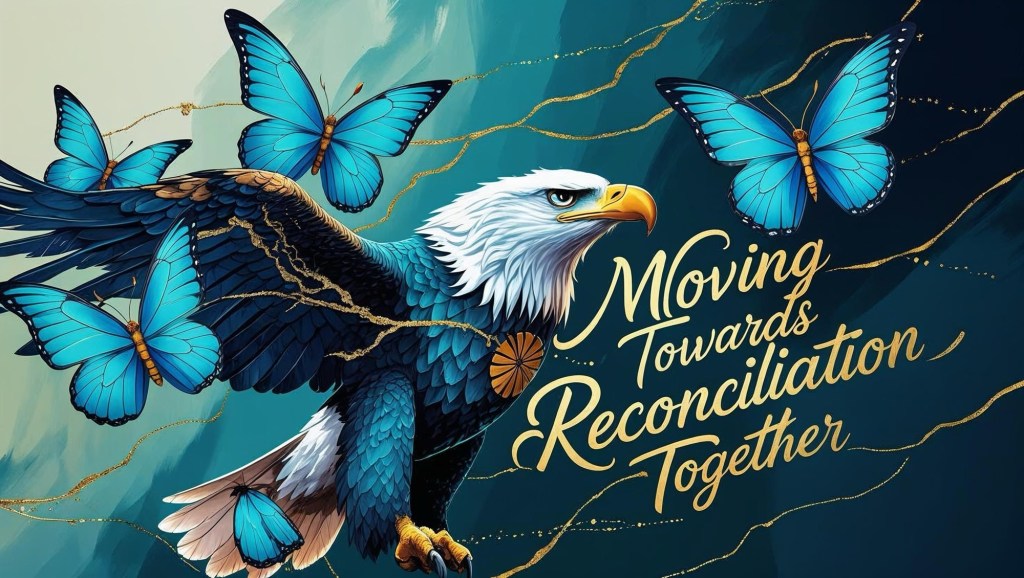
Afro‑descendant and Indigenous communities are not enemies fighting for scraps.
We are both survivors of the same empire.
Until Afro‑descendant people are no longer pushed to the back of the line under the myth that justice is triage, resentment‑fuelled violence—both direct and systemic—against us will continue to rise.
Let this not be another era where we are manipulated, exploited, and virtually silenced.
I speak with hope and trust in the ability to listen that is at the heart of anti‑supremacy work.
We are not in each other’s way.
We need to truly stand together.
We can walk home together as kindred in love.
Unconscious racism—often subtle, unintentional, and embedded in daily interactions—deeply injures Afro‑descendant children at the playground and beyond. Here’s how:
🌱 1. Learning and internalizing negative signals
Decades of research show that children absorb societal biases not because they’re taught to hate, but by observing attitudes and behaviors around them. By age seven, kids may already believe, unconsciously, that Black children feel less pain or are less worthy of empathy—despite there being no direct teaching of these biases . When a Black child’s call for help at the playground is met with less concern than a white child’s, that child subconsciously receives the message: “Your pain matters less.”
https://thereader.mitpress.mit.edu/how-children-acquire-racial-biases/?utm_source=chatgpt.com
🧱 2. The power of nonverbal cues
Kids are expert social learners. They mimic what they see in adults’ body language, tone, even eye contact. If teachers—consciously or unconsciously—anticipate misbehavior from Black children and focus on them more, or reward them less, children notice. Over time, these micro-aggressions become internalized, making children feel surveilled, misunderstood, or less valued .
⚖️ 3. Reinforced by institutions and peers
Unconscious bias doesn’t stop in the classroom—it extends to discipline disparities, game selections, and peer interactions. Black children are disproportionately disciplined or excluded from play in preschool and early childhood programs. These exclusions tell them, without words, that they don’t fully belong .
⏳ 4. Lifelong emotional toll
These daily micro- and macro-aggressions compound: Black children walk away from shared play feeling less trusted, less included, and less safe. Over time, this erodes self-worth, belonging, and mental well-being—even before they’ve learned to articulate why they feel hurt.
💡 5. Even well-meaning adults contribute
Most people don’t intend harm—and that’s the point. These are often unconscious patterns people don’t even recognize in themselves. Yet the effect remains real. Scholars call this “aversive racism”: believing in equity while still behaving in subtly biased ways, born from cultural conditioning .
In essence:
Under the radar – These aren’t overt insults, but quiet exclusions, shifted gazes, and unbalanced empathy. Unseen teaching – Children learn from observing these patterns—even if no one ever says “you’re less.” Daily toll – Every minor slight chips away at a child’s confidence and sense of belonging.
What support for children looks like:
Adult awareness: Being conscious of how we react, who we call on, who we empathize with—especially around play. Explicit anti-bias conversations: Normalizing discussions about race early helps counter the silent messaging . Empowering peers: Older children can be taught to recognize exclusion and speak up—peers play a powerful role in countering bias. Institutional change: Schools and programs must track and aim to close racial gaps in discipline, referrals, and participation.
Chinonsu’s visible harm on that day is heartbreaking—but the daily, invisible wounds inflicted by unconscious racism around every game, shared toy, or classroom moment are just as profound. They teach our children—no matter their intent—that some lives matter less. Healing and true belonging begin only when communities actively unlearn these deeply rooted patterns, and replace them with inclusion, empathy, and recognition—starting from the sandbox up.
#Nurturing Kindred #DecolonizeTogether #AfroIndigenousSolidarity #JusticeIsNotAScarceResource #LandBack #AntiBlacknessInCanada #ReconciliationMustBeTrue #ChinonsoOnuke #MutualLiberation
 Nurturing Kindred