I’ve always known that I am the love of my life. The wounding concern has always been the pain associated with how other people who are seeking love outside of themselves react to my knowing that I am rightfully the love of my life and that I love them as I love myself, and refuse to fear them or follow them just because they say to.
I’ve moved through the very painful experience of refusing to play small—not to be grandiose—but to be my full self without feeling shame for the imperfection and the dependence that is inherent to any learning curve.
Grounding me throughout this has been the awareness that as a full person I am a part of the collective as both a teacher and a learner. As a teacher I bring resources, expertise, skill, wisdom, knowledge, passion, and purpose. As a learner I have needs, dependence, and room to receive the resources, lessons and ideas that others bring as my teachers who also have expertise, skill, wisdom, knowledge, passion, and purpose.
Therefore as the love of my life I don’t need another person to complete me. It is however a wonderful thing to be in close relationship with others who value both the teacher and learner in me as I equally value the teacher and learner in them too.
The idea of being slave to submission is absolutely repugnant. And so I’ll wait until I can be in partnership with someone who has no need to be dominant, but who honours equality, wholeness, interdependence, and imperfection as the way.
In the meantime here I am learning to shed the shame which is a part of the virus of dominance that infected the wholeness of being teacher and learner as we were all born to be. And I am also learning to shed the fear that some other will inevitably try to dominate me. Experience has taught me that as Baba, Source of all, is with me I can rise from any attempt at subordination to regain my rightful place as my autonomous interdependent self.
A reflection for single mothers on identity, labour, justice, and wholeness.
A song came on this morning, and I let it soak in. I did not rush past it. I let it sit with me, let it press against the parts of me that still know how to hide. And I shared it because its invitation to me felt like an invitation that needed to be shared—to tell the truth without self-protection, even when the truth hurts, even when it is ugly, even when naming it makes your voice tremble. If we can be honest enough to expose what is weak or broken, not to condemn ourselves but to finally see ourselves clearly, we may discover the very place where strength begins to rise.
That invitation to truth is the current running through today’s reflection.
It is the day before my birthday, and I am on my way to a worship gathering. There is something tender about standing at the edge of another year, looking back over what has stretched me, what has steadied me, what almost broke me, and what resolutely kept me alive.
I am wearing my 12345 shirt, appropriate as I celebrate my fifth decade of life. This shirt is a part of a powerful message primarily connected to mental-health awareness. Megan te Boekhorst created this shirt as a part of her Living With (Mental Illness) nonprofit work. Her goal is to bring awareness to the need for Canadians to recognize and pay attention to mental illness as openly as we pay attention to physical illness and invest in healing. Living With wishes to inform us that approximately one in five Canadians experiences mental illness in a given year. All of us have mental health to maintain, yet many of us do not pay attention to mental illness even when we ourselves are experiencing it. We learn to keep functioning while hurting. We learn to smile while carrying weight. We need to become more aware. We need to pay attention.
As I continue to share the feedback that has shaped me through these years of life, my single mamas, today this one is for us. Everyone may benefit from the conversation, but Mama I especially invite you to pause and dialogue with me.
In the 1990s in the United States, the idea of the “superpredator” was a prevalent and popular narrative. Young Black boys, particularly those in certain neighbourhoods, were labelled predators in the making through research and statistics that were deeply flawed. From that label, policy was formed. Stop-and-frisk in predominantly Black neighbourhoods increased. New statistics then grew from those increased encounters, appearing to reinforce the very story that had produced them.
Years later, it was acknowledged that the research was flawed. There was no such thing as a superpredator, and policy needed to pivot. But changing a policy does not erase the harm created by the policy, especially when the super-predator label had been laid over generations of racial supremacy that had already shaped both the flawed statistics and the poor treatment of young Black boys.
The label normalized and legitimized supremacist treatment that was already in play. It robbed young Black boys of childhood. They were treated as men developmentally, emotionally, and mentally; tried and punished as men; and sometimes killed by police as though they were men in man-to-man combat. If police officers were taught that Black boys were becoming superpredators, then Black men could be treated as superpredators already formed, deserving harsh treatment within a punitive legal system. I say legal system because legality is not necessarily justice.
How did that label affect the way those boys learned to see themselves? If you are continually treated like a criminal, you may begin to judge yourself as one. What does that do to the way you move through life, to what you believe you are capable of becoming, to the goals you attempt, and to the way you dream?
And who profited from defining young Black boys that way? How many businesses arose to imprison, reform, monitor, and manage the people created as a problem by that definition? Countless structures within the school-to-prison pipeline were tied to a label built from statistics already distorted by supremacy. People profited from defining young Black boys as predators in the making.
Single moms, who defined you as less than? And how long have you been trying to live, breathe, parent, pray, and build under the weight of deficiencies that were never true?
Who defined you as the leader of a family destined, by virtue of your singleness, to fail and flounder? Who defined your home as incapable of raising and guiding children who will be successful in society? Who has defined you that way, and how has that affected you?
Who profits when you receive that definition into your being and allow it to limit the way you show up in the world? Who profits when it changes what you believe about yourself? I need you to look deeply at how that story has affected you, not with shame, but with compassion. Because some of us have been surviving so long broken by the burden of that story that we no longer recognize the places where it has narrowed our voice, our dreams, our expectations, and even the way we allow ourselves to be loved.
Have you felt whole, successful, vibrant, and worthy in your singleness and your womanhood? Have you recognized the worth of your leadership, resourcefulness, resilience, insight, advocacy, and ability to create something from nothing? Have you felt worthy of the way you celebrate your children in the absence of a father?
How did the statistics become focused on you parenting singly, as though there were not another person involved in that equation? How did fathers not being present become evidence that you were less? How did that happen?
Why have systems, communities, and churches so often told single mothers how downtrodden we are and then served us as though we are standing with our hands out, bringing nothing to the table? Why is what we bring to the table assigned less value? Do you understand the value of your work, whether other people understand it or not?
I have had to ask myself the same question. I have had to look honestly at the skill I offer and the worth I bring to the table. My first instinct was to blame myself for not having understood it earlier, but I caught myself. Blame is not useful here. What is useful is to examine this way of seeing ourselves, and recognize that it began somewhere, for reasons that need to be understood and addressed.
Now, I know the proficiency with which I work. I know the rooms I have held steady, the people I have helped breathe again, the visions I have helped carry from fragile idea to living reality. I show up when people are in distress. I show up when people are celebrating. I show up when people are dreaming and when visions are being put into play. I show up, even when I am tired, even when I am grieving, even when my own life is asking more of me than anyone can see. That is who I have always been and who I will continue to be because peace, progress, profitability, and purpose are my lifeblood and my passion.
I’ll share one of many situations where my service was sought because of my proficiency with little expectation of compensating me even close to market value. They were in a situation where they would have absolutely needed care that would have typically cost between $40,000 and $50,000. I told them not to spend that kind of money because I would help. I did not establish a fee. I simply told them to pay what they thought was fair.
Never do that. Do not undersell yourself. AND do not participate in the inflated capitalist market either.
Look at the work you are offering. Look at its value in the market, your expenses, and the actual profit you need in order to cover those expenses and live well and sensibly. Then assign a fair price. Do not balloon your profit. I do not believe a 50 to 100 percent profit markup is just when vulnerable people come to us for a necessary service rather than a luxury. A person should be able to make enough profit to live well, but another person’s vulnerability should never become an opportunity for exploitation.
In this case, the person suggested $1,000 for work that would ordinarily have cost between $40,000 and $50,000. It threw me for a loop. They understood business and what things cost. They would have paid the market price if necessary. What made $1,000 seem reasonable for my work?
As I processed it, I realized that I had been giving my work away within a system that was willing to exploit that generosity. The realization hit me squarely in the face. It was not only about money. It was about all the moments I had taught people, without meaning to, that they could receive the fullness of my labour while offering me only a fraction of honour in return. Somewhere in my forties, I understood that I had spent years offering my abilities without attaching an honest value to them, and an expectation had formed around the perception that this devaluation was an acceptable norm. This was the part that I played having unconsciously internalized the devaluation assigned to nurture, giving care, and singleness.
That was my part. I have examined it. What was theirs?
The work was not substandard. They kept returning for it because it was excellent. That was the painful part. The very thing that proved its value was also being used as permission to keep taking it lightly. The problem was not the quality of what I offered. The problem was the expectation that my excellence could continue to be received without being honoured materially.
That is why I shared the economic impact assessment alongside my reflection titled Love Pays Attention to the Shadows. I knew the worth of the work I had done. I know that all of this work is invaluable, and we also live inside a system in which money is the tool we use to pay for food, shelter, and what we need to live, and live well. I know what my work is worth within that system. I also know that other people have usurped my work to make money.
That recognition leads me to the parallel between my experience and the story of David, Bathsheba, and Uriah. The connection may initially seem like a large leap, but hear me out. David looked at Bathsheba and desired what he saw. He used his power to take her. In doing so, he betrayed Uriah, a Hittite warrior and one of his mighty men who had served him faithfully, and then arranged Uriah’s death to conceal what he had done.
David did not fail to recognize value. He saw what he wanted and chose to take it at another person’s terrible expense. That is part of the shadow I was naming when I shared the economic impact of my work. Sometimes people recognize what is good, valuable, and profitable in another human being and, rather than honouring that person, deliberately use what they carry for their own benefit.
When one person deliberately and knowingly uses another human being for profit at that person’s expense, that is the logic of slavery. Slavery requires a person to be defined as less than human so that their labour, gifts, body, or life can be treated as available for someone else’s taking. That was the experience of people of African origin and others around the world who were trapped in slavery and often legally defined as less than human. The false definition created permission for the exploitation.
So, single mom, within whatever context you are looking at yourself in the world today, please do not allow yourself to be defined by someone’s false narrative serving their flawed or nefarious purpose. Do not let someone else’s convenience become your identity. Do not let their inability to honour you become the measure of your worth.
You are a woman of God.
You are a reflection of the Creator, a reflection of I AM.
You are full of purpose.
You are full of passion.
You are full of possibility.
You are full of wonder, joy, and amazement.
You are full and worthy and whole, alone.
Being whole does not mean that you must build alone. Please hear that gently. Wholeness is not isolation. Strength is not silence. Faith is not pretending you have no needs. Whenever we want to build something meaningful, we typically cannot build it alone. While society shines a blinding spotlight on the absence of a father in your household, it often fails to ask how a team might be built around you.
So begin to build your team. Begin to build your life. Teach your children to view themselves as whole and your family as whole. Build a team of other whole people—including single people— around your family so that all of us can thrive together. You are not less because you are single. You are a whole person who needs a team in order to build.
I think specifically of churches when I consider this subject, because churches often feed us a narrow narrative about the family God created, as though any family that does not match that arrangement is not ideal. But who among us, in any way, shape, or form, is ideal? And who defined any one type of family as the ideal, and why? What I do know is that when circumstances are not ideal, the question that we would best ask ourselves is “What are we doing to create a stronger way forward?”
Instead of building forward together as equals, why do we label people as less than or define them as the problem, while continuing to use their labour and gifts to thrive and profit as they struggle? That pattern is one of the things that drove me to build single-mother community. Every time I saw an announcement for a service to single mothers, it seemed to use the same mournful, needy framework: we must help these poor women. Even the speaker’s tone of voice would change, as though our lives were only tragedy, as though our homes held no laughter, wisdom, strategy, beauty, discipline, prayer, creativity, or power.
I do not think we are always conscious of it. We can sit inside a way of being for so long that it becomes normal. But what is normalized is not necessarily right. I continue to reference the photo of a child posed smiling beside the charred body of a lynched Black man because the violence surrounding her had been normalized. The horror of that is obvious to us now and hopefully warns us to examine what our own cultures have taught us not to see. Diminishing societal value based on a set of hierarchical ideals has caused us grievous harm.
Those who are harmed are clearly harmed. Those who do harm also harm themselves. They rob themselves of the profit of being in good relationship with another human being, and they place themselves inside the consequences that follow harm.
The universe delivers consequences when we harm others. If we atone for the wrong we have done, there is mercy. Without atonement, the consequences remain. That is not an externally imposed punishment. It is the flow of justice. What is stolen calls for restitution, one way or another.
Jesus told the story of the rich man and Lazarus. Lazarus lived in poverty and suffering at the rich man’s gate while the rich man lived comfortably and did not help him. After they died, Lazarus was restored while the rich man experienced the torment he had permitted another person to endure. The rich man asked Abraham to warn his brothers, but the answer was that they had already received the message and had chosen not to listen.
Our refusal to listen does not eliminate consequence. If we keep stealing from others, be that money or honour, justice will come in some way, whether or not it comes immediately.
I was once reminded of this matter of justice in a small and unforgettable way. One day, I was deeply impatient with a child. I raised my voice and completely flipped my lid because I believed the child should simply have listened. In my anger, I was no longer fully in control of my body. When an adult or a child flips their lid, the ability to focus and regulate is diminished.
I turned a corner, struck my foot against the doorpost, and broke my little toe. As soon as it happened, I recognized justice. I asked myself: Why are you losing your mind? Why are you not being gentle? Why are you not being kind? The pain you feel in your foot is like the pain that child felt when you raised your voice and lost control because they would not listen.
And how well did I listen? How well did I listen to the Spirit saying, right as I raised my voice, “Stop it,”
Did I stop? No.
God did not push my foot into the doorpost. That is not what I am saying. I lost control of myself. I chose not to listen, and I struck my foot as a consequence. I broke my little toe, and I would never again forget the lesson.
Was God with me as it happened? Absolutely. As soon as I recognized the justice in that moment, I also felt seen, known, and surrounded. I did not feel abandoned. I did not feel ashamed. I felt that I had learned something and gained something from the pain. It became a significant turning point for me.
Accountability does not erase our worth. It calls us back to ourselves. It tells the truth without throwing us away.
Single mom, know who you are.
Do not wear the definition that anyone else has placed upon you.
Arise today to wholeness.
Begin the journey home to yourself, one honest breath, one reclaimed boundary, one brave step at a time.
Collaboration with Integrity (PC: Hannah Busing unsplash.com)
Being a part of Seventh-Day Adventist Church communities from the Caribbean to Canada has been both wonderful and excruciating. From five years old I had the opportunity to be in relationship with people from all over the world who share the common goal of living with love, joy, and health, and being of service to the wider community, as Yeshua M’shikha (Jesus) was. I could enjoy passionate and inspiring spiritual debates, youth and children’s festivals, potlucks, friendships, knowing that almost anywhere in the world I could find a gathering of people who shared many common traditions, lingo, values, and beliefs. Amazing.
And while I am no longer a member of the denomination, people whom I dearly love remain and others have recently become members. Because of my very painful dream-crushing experience I would like to share information that might empower someone to thrive instead of suffer the setbacks which retarded my progress.
For while there are many joys there are also the shadows, as exist in all of us and in all organizations—because people are the lifeblood of any and all organizations. That is why it is integral to live an examined life. Not as a source of shame and censure, but as a part of the process of living with integrity as we embrace progress, peace, purpose and increasing possibility.
What follows is information that hopefully informs someone who may encounter the shadow of co-optation as they bring their dreams and visions of mutually profitable service to life.
Question: What is cooptation?
Co-optation is taking over another’s work, idea, or movement without proper consent or credit.
Question: What is policy in the Adventist Church regarding ownership of ministries which are brought into the church?
Adventist policy does not establish that an independently created ministry automatically becomes church property merely because it is “brought into,” promoted by, or permitted to operate within an Adventist church.
“Brought into the church” is not a defined ownership category. The decisive question is what relationship was formally created.
Relationship as Related to Ownership and Creative and Financial Control
Independent or supporting ministry
Remains independently governed, financed, licensed, and legally separate. Adventist policy expressly describes supporting ministries as not controlled by or legally affiliated with the Church. Collaboration, funding and use of property should be governed by written agreements. Adventist Risk Management, 2023, pp. 2–8
Local-church department or auxiliary ministry
The founder no longer has unilateral authority over the ministry’s church operations. The church business meeting and church board govern it. The church treasurer holds its funds, and its official records and account books are church property.
Official denominational institution
Requires a formal organizational process, appropriate approvals, denominational governance provisions and governing documents addressing the organization’s assets and their disposition. It is not created merely through informal association
For a local-church ministry, the current Church Manual says:
The church board coordinates the departments and must approve departmental outreach plans.
Official records and account books of church officers belong to the church.
The church treasurer holds auxiliary funds, but those funds “belong to” the auxiliary organization and are held in trust for their designated purpose.
Those funds remain restricted to that ministry’s stated purpose. Even the board cannot divert them.
If the ministry is discontinued, the church business meeting determines what happens to the remaining balance.
Those rules appear particularly at pages 90–92 and 138–142 of the official Church Manual.
Importantly, this does not say that the church automatically acquires everything the founder created beforehand. A ministry may include several distinct things:
Its name and public identity
Curriculum, writings, artwork and program materials
Website and domain
Equipment and inventory
Money donated specifically to the ministry
A society or corporation
The authority to operate the ministry within a particular church
Each must be examined separately. Church governance of a local program does not, by itself, prove that the founder transferred pre-existing intellectual property, physical assets or an independent legal organization.
Under Canadian copyright law, the author is ordinarily the first copyright owner. A copyright assignment must be written and signed, unless the work was created in the course of employment, where the employment rule may apply. Copyright Act, s. 13
The strongest conclusion is therefore:
If an independently created ministry was merely welcomed, supported or operated in partnership with an Adventist church, it remained independent unless an actual transfer occurred. If it was formally adopted as a local-church ministry, the church obtained governance over its church operations and ministry accounts, but that still does not automatically prove transfer of every pre-existing asset, name or creative work.
The documents that would settle a particular situation are the church-board and business-meeting minutes, any memorandum or transfer agreement, incorporation records and bylaws, bank-account records, donation receipts, employment agreements, and any signed intellectual-property assignment.
Question: Does Adventist guidance recognize that informal relationships with independent ministries can cause harm?
Yes. Adventist Risk Management acknowledges that some Adventist organizations have treated these relationships too informally, resulting in claims, legal exposure and strain on denominational resources. Its guidance repeatedly calls for due diligence, accurate descriptions of the relationship, written agreements and clear separation of operations.
In other words, the Church’s own risk guidance recognizes that goodwill and shared ministry are not substitutes for clarity. The relationship should be formally established at the beginning, not reconstructed after conflict develops.
Question: Does being a church member transfer a member’s ministry, work or property to the Church?
No. Nothing in the Church Manual or other sources reviewed says that church membership transfers a member’s independently created program, property or intellectual property to the Church.
Giving one’s time in service is not automatically the same as donating everything created through that service. A donation, licence, assignment, partnership or transfer must be established separately.
Question: Does accepting church support or using church facilities transfer ownership?
Not by itself.
Permission to meet in a church building establishes where activities may occur. It does not automatically establish ownership of the ministry using the building. Adventist Risk Management recommends that a supporting ministry’s use of Adventist property be documented through a properly executed land-use agreement or lease.
Being included in church announcements, calendars, reports or Community Services activities may demonstrate collaboration or operational intertwinement. Those facts do not, without more, establish a transfer of the ministry’s pre-existing identity and assets.
Question: Can the Church select the leader of its own Community Services department?
Yes. The Church Manual places an official Adventist Community Services leader on the church board. Where a church operates a Community Services centre, the Personal Ministries Council is its governing committee and appoints the centre’s director.
The Church therefore has authority to govern its own department and choose its departmental leadership. It may also decide whether an independent organization may continue using church facilities.
That authority does not, by itself, prove that a previously independent community ministry became church property. Replacing a church officer cannot retroactively transfer a founder’s pre-existing name, materials, equipment, goodwill or independent history.
Question: Is operational intertwinement the same as transfer?
No. Several different forms of control must be examined separately:
Authority over activities conducted inside the church
Custody of money in a church account
Permission to use a ministry’s name or materials
Responsibility for volunteers and participants
Ownership of equipment
Ownership of pre-existing creative work
Ownership of the ministry’s public identity and goodwill
A church may legitimately regulate activities occurring on its premises without owning the independent organization that delivers them. Custody is not necessarily ownership. Permission is not necessarily assignment. Collaboration is not necessarily surrender.
Question: Does being unincorporated make a ministry ownerless?
No.
An unincorporated ministry may not have a separate corporate legal identity. That can make it more complicated to determine who may enter contracts, hold property or bring a legal claim in the ministry’s name. It does not create an ownership vacuum into which another organization may simply step.
Ownership must be traced through evidence such as:
Who created and first publicly used the name
Who authored the materials
Who purchased equipment
Who held the accounts and domains
What donors were told
What the founders agreed among themselves
Whether anything was gifted, licensed or transferred
What the parties represented to the public
Depending on those facts, particular assets may belong to founders, individual creators, purchasers, members or persons holding them for an agreed purpose.
Question: Can someone own the idea behind a community program?
Copyright does not protect an abstract idea, goal, method or general ministry concept. It protects the original expression of that idea once it has been placed into a fixed form.
A program may therefore contain several legally distinct interests:
Written curriculum and training materials
Forms, reports, photographs and artwork
Website and promotional content
Databases and original compilations
Its name, reputation and community goodwill
Confidential information
Equipment and inventory
Money and contractual rights
The general concept of supporting single mothers may not belong exclusively to anyone. The particular name, written materials, visual identity, records and resources created to deliver that vision may have identifiable owners.
For copyright, Canadian law is clear: the author is ordinarily the first copyright owner, subject principally to the employment exception, and an assignment must be written and signed by the owner.
Other forms of property can sometimes be gifted or transferred through words and conduct without a single formal transfer document. Therefore, the absence of writing is not conclusive for every asset. It does, however, make it necessary to examine the entire record carefully.
A person or organization asserting ownership should be able to identify what was transferred, by whom, to whom, when, on what terms and through what authorized decision.
Question: Does volunteering inside a church transfer copyright in the volunteer’s work?
Not automatically.
Volunteering does not by itself establish that creative work was produced under a contract of employment. If a volunteer wrote curriculum, designed materials, created artwork or produced website content, the authorship and any agreement governing that work must be examined.
Permission to use material may sometimes be inferred from the circumstances. Permission to use something for a particular program is not necessarily an assignment of ownership or unlimited permission to use it forever.
Authors also retain moral rights, including rights relating to attribution and the integrity of their work, unless those rights are expressly waived. Moral rights cannot themselves be assigned.
Question: Who owns the ministry’s name and community goodwill?
A name is not ordinarily protected by copyright. Rights in a name and the goodwill connected to it may instead arise through trademark law, trade-name use and the law against passing off.
Registration is valuable, but prior public use can also matter. Evidence may include dated flyers, social-media pages, emails, websites, domain registrations, photographs, media coverage, participant testimony and community partnerships.
Canadian trademark law considers matters such as how long a name has been used, how well it has become known and whether another use could create confusion about who is providing the services.
Question: Who owns money collected for the ministry?
The answer depends on how the money was collected and what donors were told.
For an official church auxiliary, the Church Manual says that money received by or for the auxiliary organization is turned over to the church treasurer. Importantly, it also says that the funds belong to the auxiliary organization, may be disbursed only by its order and are held in trust for the purpose for which they were raised. Neither the treasurer nor the church board may divert restricted funds to another purpose.
Money given directly to an independent ministry must be examined according to its account records, donor directions, receipts and any agreement with the church.
Financial administration is evidence of custody. It is not necessarily proof that every underlying interest belongs to the institution administering the account.
Question: Who owns equipment used inside the church?
Usually, the evidence begins with who purchased it, whose funds were used, whether it was donated and whether a transfer was accepted.
Storing equipment in a church, allowing church volunteers to use it or using it in a joint program does not automatically transfer ownership. Relevant evidence includes invoices, bank statements, donation records, inventory lists, correspondence and photographs.
Question: Can participant records simply be transferred to a new leader?
Not merely because leadership has changed.
Participant records may contain sensitive personal information. In British Columbia, the Personal Information Protection Act applies to organizations, including unincorporated associations and not-for-profit organizations. It regulates the collection, use, disclosure, custody and protection of personal information.
Questions about participant files therefore extend beyond who physically possesses the documents. They include who collected the information, what participants were told, what they consented to, the purposes for which it may be used and whether disclosure to another organization or leader is legally authorized.
Question: What is the significance of telling an incoming leader that no program previously existed?
Such a statement does not itself create or transfer ownership.
It may, however, prevent the incoming leader from asking necessary questions about the program’s history, founders, assets, relationships and existing obligations. It may also create an inaccurate public or institutional record.
Adventist Risk Management specifically emphasizes that publications, correspondence and public statements should accurately describe the relationship between the Church and an independent ministry. Where prior existence is disputed, the appropriate response is to preserve the evidence and investigate, not to treat one party’s description as settled fact.
Question: What does an economic impact assessment establish?
An economic impact assessment does not, by itself, determine legal ownership or the amount of legally recoverable damages.
It can nevertheless document matters that might otherwise remain invisible: years of unpaid labour, program development, organizational capacity, community relationships, lost professional opportunities and the potential economic scale of the work that was interrupted or assumed by others.
Its purpose is not to suggest that every projected dollar would certainly have been earned. Its purpose is to show that caregiving, community development and grassroots organizational labour have real economic value and that their loss can produce real financial, professional, social and emotional consequences.
Question: What would responsible investigation and resolution require?
A responsible process would:
Preserve all relevant records and disputed assets
Obtain church-board and business-meeting minutes
Identify what existed before church involvement
Hear directly from the founders and successive leaders
Trace each asset separately
Produce a complete accounting of restricted money
Determine what authority each leader actually possessed
Correct inaccurate descriptions of the ministry’s history
Address participant privacy and record custody
Consider acknowledgment, attribution, return of property, licensing, compensation, restitution or an agreed separation
Record the final resolution in writing
Question: How can members protect their ministries before accepting institutional support?
Before operations become intertwined, both parties should sign a written agreement addressing:
Whether the ministry remains independent
What support the church is offering
Who governs which activities
Facility access
Ownership and permitted use of the name
Ownership of existing and future creative materials
Banking, donations and financial reporting
Equipment and inventory
Participant privacy and records
Insurance and safeguarding
Public descriptions of the relationship
Leadership changes
Termination and return of property
Dispute-resolution procedures
Clarity protects the Church, the ministry, its founders and the people they have come together to serve.
Note on scope: This is general educational information, not a legal determination of any individual situation. The linked legislation and denominational documents are the authoritative sources. Particular circumstances should be reviewed with appropriately qualified legal counsel.
Wise Safeguards for Moving Forward
Question: What is the most important safeguard?
Name the relationship before beginning the relationship.
Is the ministry:
Remaining fully independent?
Entering a temporary partnership?
Participating in a jointly operated project?
Becoming a local-church department?
Donating particular assets to the church?
Granting the church limited permission to use its name or materials?
These possibilities create very different expectations. “We are supporting you” is not sufficiently clear.
Question: Does putting the relationship in writing suggest distrust?
No. Clarity is a form of care.
Written agreements protect everyone when memories differ, circumstances change or the leaders who began the relationship move on. A simple agreement can preserve trust by ensuring that no one must later guess what was intended.
Friendship may begin the conversation. Clarity helps the friendship survive leadership changes.
Question: What should be documented before operations become intertwined?
At minimum:
The ministry’s history and date of establishment
The names and roles of its founders
Whether it remains independent
What support the church is providing
Who makes which decisions
Who owns the existing name, materials and equipment
How jointly created materials will be treated
Where money will be deposited and how it may be spent
Who is responsible for participant information
How the relationship may be ended
What happens to every asset when it ends
Both parties should receive a signed copy.
Question: How can a ministry preserve its history?
Create a dated ministry record containing:
Founding documents and early planning notes
Flyers, photographs and program announcements
Media coverage and community correspondence
Meeting notes
Financial records and receipts
Copies of curriculum and creative materials
Volunteer and partnership records
Website and domain information
Annual summaries of activities and community impact
This is not merely preparation for conflict. It honours the people who conceived, built and sustained the work.
Question: How should money and equipment be protected?
Maintain an asset inventory from the beginning. Record who purchased or donated each item, the source of the money and any conditions attached to the gift.
Independent ministries should ordinarily keep independent accounts. If money must pass through a church account, both parties should document:
Whose money it is
Why the church is holding it
Who may authorize expenditures
How frequently statements will be provided
What happens to the balance when the relationship ends
Financial transparency should be mutual and routine, not something requested only after trust has broken down.
Question: What should happen when leadership changes?
The outgoing leader, incoming leader and ministry founders should participate in a documented handover.
The incoming leader should receive:
An accurate history of the ministry
The written agreement governing the relationship
An inventory of assets
Current financial information
The limits of the church’s authority
The names and continuing roles of the founders
Any unresolved concerns
No incoming leader should be required to make decisions based entirely on one person’s oral account.
Question: What safeguards are needed for names, websites and creative materials?
The agreement should identify who owns:
The ministry name and logo
Website and domain
Social-media accounts
Photographs and videos
Curriculum, forms and training materials
Written stories and publications
Mailing lists and databases
It should also state what each party has permission to use, for how long, for what purpose and what must stop when the relationship ends.
Shared access should not mean uncontrolled access. Important accounts should have secure recovery information and more than one trusted administrator, while ownership remains clearly recorded.
Question: How should participant information be protected?
Participants should be told clearly which organization is serving them and which organization will hold their information.
Before records are shared or responsibility changes, the parties should determine:
What participants originally consented to
Who is legally responsible for the records
Who may access them
How they will be protected
Whether new consent is required
What happens to them if the partnership ends
People receiving care should never become invisible assets in an organizational transition.
Question: What are early signs that clarification is needed?
Pause and seek clarity when:
The ministry is described differently in different settings
Church leaders begin making decisions outside the agreed scope
Money is combined without regular accounting
The founders are excluded from meetings concerning their program
Materials are reproduced without acknowledgment
New leaders are introduced without consultation
The ministry’s independent history disappears from public descriptions
Requests for written clarification are repeatedly postponed
Support gradually becomes supervision without discussion
These signs do not automatically prove bad intent. They show that the relationship needs immediate attention.
Question: How should uncertainty or conflict be addressed?
Begin early, while repair remains easier.
The parties should:
Pause major changes
Preserve the relevant records
Put their separate understandings in writing
Identify the particular points of agreement and disagreement
Review the original documents together
Involve a mutually acceptable neutral person
Obtain independent legal or accounting advice where needed
Record any resolution in writing
The goal should be truth, repair and a workable future, not victory over one another.
Question: Should a ministry depend entirely on one supportive leader?
No matter how wise, trustworthy or encouraging that leader may be, the relationship must extend beyond one person.
Promises made by an individual leader should be recorded and appropriately authorized by the organizations involved. A healthy agreement should remain understandable and enforceable after a pastor, founder, board member or Community Services leader leaves.
Question: What should churches do when members bring forward community visions?
Churches can honour those members by:
Learning the ministry’s history before offering support
Asking what kind of relationship the founders want
Encouraging founders to receive independent advice
Clearly explaining church governance requirements
Recording what will and will not become church property
Respecting authorship and community knowledge
Ensuring that support does not quietly become control
Celebrating the ministry’s origin honestly
Planning together for leadership transitions and possible separation
Support should increase a community vision’s capacity, not absorb its identity through ambiguity.
Question: What is the ultimate purpose of these safeguards?
The purpose is not to build walls between churches and community visionaries. It is to create relationships strong enough to hold generosity, accountability and change.
Clear agreements allow people to share facilities, knowledge, money, labour and encouragement without anyone losing their history, dignity, contribution or right to informed choice.
Love does not require ambiguity.
Love pays attention, tells the truth and makes room for everyone’s light.
In the days leading up to my birthday, I continue to share the feedback that has helped me to grow; today’s offering is the idea that:
Love pays attention to the shadows.
The shadows:
Persons employed by the Seventh-day Adventist Church have expressed supporting interest in programs begun in the community by members, and when the invitation of support is accepted assume control without consent, transfer, or acknowledgment.
When informed of this injustice the Executive Leaders of the Organization fail to act, refuse to engage in discussion or investigation, and threaten legal action against the affected parties if they speak publicly.
Because Momunity was unincorporated, that does not mean it was ownerless. Its name, records, equipment, money, creative materials and community goodwill can be traced to their actual owners.
This was my experience.
It is not bad for a person to point out an ominous shadow. A shadow may signal harm because it reveals that something is blocking the light. Pointing it out is a call to carefully investigate what is happening. The risk to the room lies in refusing to acknowledge the growing shadow.
I’ve always known that it was highly important to know when to pay attention to shadows. I had a now resolved decades-long sensitivity to darkness which I suspect may have been caused by an early infant memory of shadows in the night. That may be one of the reasons why shining a light on what lurks has always been important to me. That brings a memory to mind.
When I was a little girl I dearly loved watching Perry Mason. I was so enthralled by his defence of the complicated innocent that on the days when school became too overwhelming for me, I would take an unauthorized mental health afternoon, and find safety in Raymond Burr’s portrayal of Mason, the defence attorney who consistently prevailed because he listened, and lead his team to invest themselves in paying keen attention to the details. And then one evening in 1988 our family watched a Perry Mason marathon which included the re-run for the first time since its initial release in 1963, of the only case that he lost: the Case of the Deadly Verdict. It was a complicated tale of a young woman who thought that what she had seen was too harmful to share—she thought that too many people would be hurt—and so although she held her tongue with some resentment, she refused to share the information that would have saved her life. She was found guilty of the murder of which she had been accused, and was sentenced to death. But Perry never gave up. He had listened to her. He had paid attention to the details, and he knew that he was missing the one thing that could exonerate her.
Enter the shadows… After relentlessly reflecting on every single detail Perry realized what he had missed. And with the help of the devoted family housekeeper, Perry, Paul, and Hamilton Burger set out to draw the real killer into the open—out of….the shadows.
That eerie scene with its mournful music twisted round the depths of my soul as the convicted woman’s errant brother-in-law stealthily went up the stairs intent on strangling the housekeeper so that the secret of his murderous deed would die with her. He was disguised as a woman to hide his identity. That disguise had almost cost Janice her life. She had been willing to hide what she thought was her brother-in-law cheating on her beloved sister to spare her sister the pain—what she didn’t know is that the woman whom she thought she had seen was in fact her brother-in-law in the disguise which he used to protect himself from being accountable for his actions.
As his shadow crept closer to the housekeeper, hands extended to do the dastardly deed, Perry, Paul, and Hamilton Burger turned on the light and revealed themselves.
That scene made me sick. Literally, physically sick. I couldn’t sleep alone that night. I had to sleep in bed with my parents. I spiked a fever. My nervous system went into full overwhelm mode. It took hours for my system to return to calm—to be able to connect with gratitude that the truth had been revealed in the end.
Perry naming what he had seen was not the problem…the brother-in-laws life-ending actions and his attempts to cover up at all costs including up to committing murder again was the issue. Much like the experience in the biblical story of David orchestrating the murder of his very close friend, Uriah, whose wife Bathsheba, David had stolen by force of his word as king.
And Nathan courageously flipped on the light to invite David into accountability.
Naming what has or may cause harm is not condemnation. It is responsible care. The great danger begins when preserving comfort, appearance, or certainty becomes more important than acknowledging what may threaten the security and healthy growth of the community.
Please, don’t shoot the messenger. Please listen to the message. I am speaking because I care, and because I have repeatedly tried to speak with community leaders privately. I waited too long to speak more openly, hoping that what I had raised would be carefully examined and addressed. While I waited, I watched other people be hurt.
I have also lost relationships with several people who were, and remain, very dear to me because, after years of denying my own experience, I could no longer ignore what I had experienced, what I had witnessed with my own eyes, or the patterns of concealment surrounding it.
I have repeatedly pursued private accountability. Those efforts have not resulted in a meaningful response. I therefore have to speak to the community.
I am not seeking to shame or blame, and I am not seeking to drag anyone into the figurative community square to be condemned. I am asking the community to listen, to investigate carefully, and to decide what responsible care now requires of us.
I am asking us to turn on the light.
With love and solidarity, Saran Lewis
Momunity: Single and Strong
Existed independently in the community before Leader 1 extended an invitation of support and mentorship.
Entered the church because its leaders were promised support, mentorship, encouragement and facility access.
Was never formally transferred, merged, donated or dissolved.
Became operationally intertwined through the conduct of church leadership, not through our informed agreement to surrender it.
Was later placed under new leadership as though it had always belonged to the church.
Had its prior existence concealed from two successive incoming leaders.
Operational intertwinement is not the same as informed consent to transfer ownership or control.
The fact that incoming leaders were told “there was no existing program” is especially important. It suggests this was not simply an unclear transition:
It effectively erased Momunity’s documented community history.
It prevented the new Community Service leaders from engaging in ethical collaborative engagement with Momunity’s founders.
It concealed that control was being assumed over something that already existed.
It created the false impression that the church was establishing a new program rather than erasing the leaders of an existing grassroots ministry.
It deleted the financial and professional benefit to the founders and stole their opportunity to grow and develop this vision which we began to execute together. This robbed us and our families and created deep social, emotional, professional and financial trauma and vulnerability.
Here is an economic impact assessment. This seemed to be needed because caregiving in home and community seems to be deeply undervalued. I knew its value socially, spiritually and financially. No one took our pain seriously because they did not view our work as financially valuable. As a person of great wisdom and vision Leader 1 saw the value in it.
I’ve made dozens of these warmth and lovingkindness (WALK) blankets and given them away. Melissa and Shannon have told me several times that I should also offer them for sale and special order.
And it’s time to do that.
But today I made a pretty pink WALK Neck Nuzzler (scarf) for a precious young person, and got 3/4ths of the way through a blanket that I’ve had on hold for a fabulous wild child. Next will be a Shrug Hug – a warm snuggle of love that wraps around one’s shoulders.
I can’t find my quilting square so as I was leaving the house to run errands I quickly grabbed a piece of cardstock that had been previously used–as I intended to make the blanket while I waited for the girls.
As I cut the piece of cardstock as a guide to anchor each of the four corners, I smiled as I remembered how much more anxious I used to be about perfecting the process when I first began to cut the blankets myself instead of getting them pre-cut by the CIV Prayer Team.
I was sometimes so frustrated that I cried. The fabric needed to be perfectly laid out, the squares all needed to be precisely cut, strips needed to be exactly one and a half inches wide and three or four inches long. Then one day as I was wrestling to line everything up just so, Priya said, “you’re supposed to be enjoying this Mom, not worrying about it being perfect.”
Yeah. Chick. Practice what you preach.
Anj rubbed my back, and reminded me that it was okay.
I listened.
My shoulders dropped, tears stopped and I leaned in to enjoyment.
That soon evolved to not needing the quilting square, not needing the big table, not needing anything but the fabric, sharp scissors, a piece of a flat surface, a comfy chair, and a four-sided piece of paper with edges that could serve well enough as a guide.
As I prepped the fabric today I chuckled as I realized that peace and purpose had long ago aligned with process to create joy.
In the days leading up to my birthday, I continue sharing the feedback that has helped me to grow; today’s offering is the idea that:
To get to peace, one important piece of the puzzle is to stop repeatedly asking closed people to become the witnesses that we believe we deserve.
Several years ago I was watching Grace and Frankie and was SO inspired by Frankie’s celebration of her birthday as Frankie Fest. My very good friend’s birthday was coming up and I had been wondering what to do to celebrate her with the kind of joy that our friendship had brought to me. And so the first friendfest was born. It was SO MUCH fun to find little ways to celebrate her each day until her birthday. I wasn’t really sure that I could do it, because there were almost forty days until her birthday. It was amazing though, how as each day went by I didn’t run out of things to say. And with each day of expressing gratitude for her the ideas of what to do to honour the final day grew.
It was so much in my wheelhouse because giving openness that honours each person is one of my very favourite things. I have always felt so constrained from doing that because I never felt like I had enough money to do that for all of the people in my life, and for everyone everywhere.
I used to feel highly stressed and like a huge failure at Christmas, because I always felt inadequate with not enough money to give to everyone whom I have ever loved. That’s a super duper long long long long list.
But as the years went by I began to learn that money is an investment in living life. I learned that I might not be able to give as many tangible gifts or as much money to everyone as I have always wanted to do. I realized that what I really wanted to do was to let people know how much they were loved. And I realized that the stress I felt was fear that the recipient would not understand just how much love was being given—and worse the bigger fear was that they would reject it or maybe even worse belittle it. They would not realize that I took their existence and their worth very seriously.
I sat with God because I was feeling so immensely overwhelmed that I felt like I was about to die. That’s burnout. I was so exhausted that the songs that used to bubble out of me had completely dried up. Completely. Every single breath and step felt almost impossible—like I was wearing the heaviest lead shoes. That’s depression.
And at the same time I was frantic. I couldn’t stop showing up. I’d be a failure. That’s anxiety.
I continued to live and continued to show up, wringing every drop of effort out of myself to be to the world the love that I feel for us all.
In 2012 for the first time I went to seek professional therapy. My professor, Jennifer, who almost immediately became my big sister, said to me that she could see the overwhelming wounds obstructing the flow of love and excellence that she could also clearly see in me.
I knew that I needed help; I just didn’t know WHAT KIND OF HELP I needed, and I didn’t know where to find it. She gently guided me to the Trinity Western University Counselling Centre.
Pause here with me.
It’s very important that I say this and as clearly as I possibly can:
I grew up with a very clear understanding that I was not all. That’s a wonderful thing to know. My parents had guided me to accept the openness that I felt to a higher comforting presence. And with what I believe was the best intention to keep me safe and well, and anchored in that presence’s lovingkindness, I was taught that I had to be “good”, and that goodness was the only thing acceptable to that higher comforting presence. Goodness was unintentionally defined as continuous perfection. That definition didn’t begin with my parents. It had been taught to them, as it had been taught to their ancestors, and their ancestors’ ancestors; it had been taught as far back as my ancestry could be traced.
Continuous perfection. A standard defined not by the comforting presence but by my ancestors. And we were driven towards that goal largely by judgment and punishment.
That definition didn’t even begin with my ancestors though, it began somewhere far in the past where all of our early ancestors were taught that no person was acceptable as a part of society unless they were visibly 100% perfect. I say all of our early ancestors were thus taught because what I have witnessed as a common leaning towards punishment and insistence on perfection implies this.
Then a multitude of rules began to be constructed, increasing with each generation, to define perfection. And we were driven towards that goal largely by judgment and punishment.
I was taught that to be continuously perfect all I needed to do was believe in that comforting presence to which I had been easily and comfortably open. I did believe. Deeply. Easily. Completely. And I was a child, a human, a person who learned by trying, feeling, making mistakes, receiving guidance, and trying again. I could not be continuously perfect because no child can be. No person can be. We grow in the ability to be skillful by doing, and failing, and trying again with the strength and the knowledge gained from the attempt before. But that’s not what punishment and judgment taught me. Punishment and judgment taught me not to be confidently human, it taught me to be increasingly afraid.
Because when I was inevitably human, I did not learn that the definition of perfection was impossible to attain; instead I learned to question myself. I learned that every mistake might mean that I had not believed enough, tried hard enough, listened enough, prayed enough, been good enough. The ordinary process of growing became evidence against me. The dissonance in that process is counterproductively crippling.
Therefore I learned to monitor, correct, and override myself. I learned to keep showing up long after I was exhausted because goodness had become something I had to prove.
And now come back with me to the beginning of guided therapy.
I. Love. Us.
This has been long—it will be longer in another place—but I’ll shorten it today by saying that therapy in all the various forms to which I have been guided brought me to this one conclusion: that comforting presence, which some of us call God, loved us so much that they sent their beloved son as a messenger and teacher to tell us the truth about how much they loved us, even though they both knew that we’d be so entrenched in our belief, in our idea of perfection, that we would reject and execute the messenger. The messenger, Jesus, didn’t come to condemn us. He came to relieve us so that we could stop being so exhausted and anxious and have the opportunity to embrace his example of the comforting presence’s way of life. Peace.
And so in 2015 after years of therapy and listening to teachers speak of the way that our brains were really designed to work in harmony, to grow developmentally with each other, I said “God, I want my song back.”
Each day for a whole year, I awoke and the first thing that was on my mind was a song that I had known in the past. I wrote each one down, and journaled about it as and after I sang it. I wish I knew where to find that journal now.
I don’t need it though. Because eventually I began to sing and jam and enjoy life again. And as we began to look at the wounds, I began to let the messenger guide me through the Bible, to understand and become acquainted with the comforting presence again. And that’s where I had the amazing experience of being freed from “goodness”: from the well-intentioned but deeply flawed compounded definitions of being. There, God freed my fucks on my journey through the Bible with Jesus, and became my best friend.
Everything that I have done since, my passion for being with and sharing the joy of being with each other and supporting each other without feeling consumed came from that journey. To get to peace, one important piece of the puzzle is to stop repeatedly asking closed people to become the witnesses that we believe we deserve.
We often remain remarkably open to reconciliation, even after serious harm. That is beautiful. That is a worthy goal. And we can become stuck waiting to progress until the person or institutions who have caused us harm are open to the full process of reconciliation.
And because being unanswered or dismissed is particularly painful for many or some of us, silence can pull us toward giving more explanation, seeking more evidence, and making more and more attempts to finally make the person understand.
Sometimes nonresponse is information.
We may need to move towards these steps:
🦋Make one clear request. 🦋Follow up once. 🦋Document what matters. 🦋Then choose escalation, boundary, release, or grief.
We can pursue accountability from persons and institutions without depending on the other party’s emotional recognition of our reality. Not every rupture will be reconciled, or not every rupture can be reconciled in the timeframe that we expect or desire, because reconciliation requires participation from both sides.
Atsuko shares the importance of knowing who you are—and who you’re not.
August 19, 2026
In the days leading up to my birthday, I continue sharing the feedback that has helped me to grow; today’s offering is the idea that:
You deserve love. You deserve consideration.
You are deeply valued here.
Today’s feedback is about one of the earliest ways we can teach that truth: how we guide children to meet what is unfamiliar. When a name, culture, ability, appearance, or tradition is new to us, love and consideration ask us to expand our understanding, not ask another person to shrink themselves into what we already know.
And if we are asked to shrink for the comfort of those around us may we lean into the tension and allow it to strengthen our resolve to give ourselves the love and consideration we need to remain fully who we are, because the world cannot experience its perfectly blended harmony without each of us.
Dear Teacher,
Your heart is for your kiddos. Thank you for that 🦋. And when students react with defensive teasing to an unfamiliar name the best path might be to help them past the discomfort of exploring the unfamiliar. Because students can learn to pronounce Atsuko just as they learn to pronounce the words “could”, “receive”, or “walk”.
Teaching new things is a wonderful part of the learning journey—and learning to pronounce new names, finding their meanings, and exploring their origins is a part of the beautiful harmony created when different subjects and their many branches of knowledge meet, blend together, and form the very melodious composition that the world is and can become.
It is so important to guide young learners toward appreciation for this process, because encouraging them to turn away from the unfamiliar unconsciously plants seeds of supremacy. It teaches them that what is familiar to the perceived or declared majority is the acceptable standard of being, while people who have different abilities, appearances, names, cultural norms and traditions must alter themselves to be considered acceptable.
In the days leading up to my birthday, I continue sharing the feedback that has helped me to grow; today’s offering is the idea that:
Peace, purpose, and process are already aligned to bring us joy. We can experience that by leaning into gratitude for each other—gratitude for our core innocence and our good intentions, gratitude for the courage and openness to move through all our conflicts to resolution and the progress that effective communication brings.
And so yesterday I went to the river and offered up a gift of gratitude in that place where land and water meet in celebration of being one with our Creator Family among the elements from which they prepared a home for us.
Did you ever realize that fire cannot exist without the connection of sparks and fuel? A spark on its own flashes and disappears. Fuel on its own remains full of unrealized possibility. And when they connect, they become warmth and light. Useful, productive, progressive, creative together.
Perhaps joy is like that too. Already present in what each of us carries, waiting to be kindled through gratitude, courage, and our willingness to remain open to one another through the process of creating thriving healthy relationships as we engage with effective communication to resolve all conflicts between us, as Yeshua M’shikha, the Incarnate Heir of Love, showed and taught us to do.
I believe that we desire to become less defensive, to listen more patiently, and distinguish context from rebuttal. I see it clearly and also see that sometimes our emotions and ingrained survival reactions overpower our intentions.
When someone raises a concern, our minds may quickly see everything that we think explains what happened. And if that context arrives before we listen well enough to affirm that the other person feels understood, our perception may function as a rebuttal regardless of our intention.
A powerful discipline for us to implement would be:
“What I hear you saying is… Have I understood you?”
Then ask questions until they say yes. Only afterward is it best to move to:
“May I share what was happening for me?”
Our capacity to explain may be highly developed. Our next growth may be tolerating the vulnerable pause, being patient in that uncomfortable place where we may feel misunderstood, before explanation because we have faith that we will be heard.
I believe in our arrival at joy, as peace, purpose, and process align for us all. And for that I expressed gratitude on our behalf.
What I do believe is that perfection can be incrementally attained with each level of new understanding and skill gained. Therefore perfection is built and constantly repaired, with no expectation that it must never need to be regained. Perfection is built through new understanding and skill, disrupted through ordinary humanity, and repaired or regained through practice. Needing to regain it does not mean that previous growth was false.
My school experience was AMAZING and challenging. Yup go ahead and roll your eyes because what experience isn’t. Well, dude this is my story.
Pucker up, buttercup (which as an old friend once told me are super strong and hardy plants). So ha! Buttercup is side-eying 👀 you too. Here we go.
I have never had a more amazing school experience. No hyperbole. Simply legend-ARY. The curriculum development team built the program with people of all abilities and skill-sets in mind. Assessments were initially done, which was a great place to start, because even before classes officially began people who were hopeful but who doubted their ability had the boost of confidence that doing well the first time brings—when doing well the first time has been the traditional marker of success. The scaffolding was highly effective. There was no need for anyone to worry about not knowing what was needed. Whatever one might need to know was taught, and learners had the opportunity to explore, dig in to the treasure field of existing knowledge and extract the elements that were most valuable to them.
We were guided by Leslie Fahr, a highly competent professional mentor, who skillfully trimmed the anxiety that was highly visible in the room as the old weeds of systemic trauma tangled themselves into the already-bountiful grove of diverse minds, a grove which was well-primed for new growth.
Leslie was one part of a vibrant ecosystem, which is the image that comes to mind when I reflect on the plethora of people and organizations who together created the SCSW-CHWK project: the Sqwá First Nation Education Team— Dianne, Penny, Jade, Elder Aunty Violet; the Discovery Community College team—James, Candice, Lisa, Heather, Benita, Shelley, Isaac, and myriad others across both those organizations; and others such as my WorkBC employment consultant Deepmala, and other employees of broader provincial federal, civic, and social organizations that help nourish and sustain the ecosystem which supports our community’s healthy existence.
The experience was amazing. I am repeating myself. I know. The emphasis is intentional. It was that good.
And there were challenges. Big ones. Life-altering ones. Together, we faced them. In order for that to happen we spoke up repeatedly, persistently. I had to strengthen my lagging communication skills. I had to use all the tools available to amplify the accessibility message that I needed to be heard. It took Herculean effort to consistently practice a better way of showing up through conflict intertwined with excellence for every day of eight consecutive months. Conflict is not usually a part of interpersonal relationships because of bad intentions; conflict is that part of the relational growth curve where asymmetrical and varied lived experiences can become tangled as we move through life together.
I was able to use the opportunity to continue the lifelong practice of regulating my sensitive nervous system. I was able to continue to name the need that none of us recognized would arise prior to entering into the experience, and I was able to continue to hold space for collaborative progress until we were able to sit around the table and figure out what needed to be done.
Practicing mastery of self-regulation and moving through accountability without blame or shame is important because everyone has the right to choose what they will do. We’d like to hope that everyone will always access agency in ways that are mutually profitable to all, and the reality is that in some way or another we all at times become tangled in the weeds of supremacy and refuse to connect to the ecosystem so that we can function optimally together. Self-regulation helps us to honour choice and wait for collaboration and reconnection without doing harm.
That walk across the stage was a walk of triumph for everyone there, and for all of us all across this world wherever or whomever we may be. That walk celebrated our power to show up, celebrated the increasing wellbeing of our ecosystem—as we live free, at home in ourselves nowhere, and everywhere, as Maya Angelou says, and always — right now, experiencing harmony on Earth as it is in heaven.
PS. This was for me the half-graduation though the program is officially completed. The second will be in the fall which I am excitedly looking forward to celebrating 🙌🏿 in a good way.
I love you, and… I know it’s hard to hear this. And it’s really important that we listen because we are all being harmed by this virus of supremacy. Or rather it’s really important to me to speak, and I hope that at some point we can listen and discuss together.
There has been a much publicized photo which shows a lone Afro-descended young woman seated on a train surrounded by White Supremacists. This is not courage. This is reality. This is not her choice. And this is not just an American problem this is the world.
In response to concern about the dynamics displayed in this photo the response has repeatedly been: did they kill her? No? Then all is well.
Is that truly how we measure our own experience of safety? Is the question did you survive? Or would it more correctly be: did you feel no threat, no fear, no concern that you might not survive?
In the American Civil War, it is estimated that hundreds of thousands of people died fighting for the right to own Afro-descended people and use them as free labour.
The timeline of the nation indicates that it has been longer immersed in this ideology than it has not been.
People were freed, and then they were segregated so that there would still clearly be those who belonged above and those who belonged below. Dominance and subordination. Caste. Class.
In this era, racial supremacy still sits unexamined in the minds of most Americans. And not just Americans, but in most of us.
Unexamined in most. Present in all.
It is important that we do not exclude any of us from this examination of unconscious supremacy, because all of us sit in that position of dominance in some area in our lives:
In this era, supremacy still sits largely unexamined within our collective consciousness because there has never been a peaceful national reckoning with racial supremacy or any other kind of supremacy. There has never been a conscious collective choice to restore and rebuild the nation on a foundation of equality.
Instead the nation has used war and then laws to criminalize supremacist behaviour without creating open forums to discuss and bear responsibility for, and work through the imbalance that maintains supremacy unconsciously.
We’ve swept supremacy under the rug instead of getting rid of it completely.
Supremacy continues to unconsciously exist because we do not become magically transformed from any state of being to another.
Transformation involves restorative action. It involves deliberate active growth from unconscious incompetence to awareness of incompetence to learning and practicing new skills which facilitates the transformation to skilled application of knowledge (unconscious competence).
If one finds themselves unable to even consider the idea that supremacy is still unconsciously harming those with whom they are in relationship, it means that supremacy is still present and attached to shame in the shadows of the mind. Bringing it to the light is where it will begin to become visible so that the process of weeding and pruning can begin.
Awareness is not the same as growth in competence. Knowing that supremacy is wrong does not mean we have learned how to recognize it within ourselves, receive correction when it is revealed, repair the harm it causes, or build relationships in which equality is actually practiced.
Prohibitive laws are intended to be guardrails, and if we depend on laws to suppress behaviour, we lean into Jung’s assertion that what we resist will persist and will come forth later in uglier ways. Until we create spaces for safe growth through accountability, apology, and new meetings of the mind, supremacy will continue to burn like a fire which is controlled but not extinguished.
We then over-burden our emergency response and public health services with cases that would never have existed if we had the skill to care for ourselves—if we had developed the ability to accept the discomfort that is a part of the process of settling disputes and creating ways to meet needs without devolving into oppression, suppression, and violence.
If our systems had not been driven by prohibitive laws which focused on punitive measures to ensure success we would not have shamefully hidden our supremacy, we would have moved through the struggle that it takes to become true friends.
I wrestled to understand what Aunty Maya Angelou meant when she said only equals can be friends. I wrestled to understand what my great-grandmother, Sarah-Ann, meant when she said that only equals should marry. I understand now that only equals can build effectively together, because only among equals can we tolerate examining faults. If we bristle and become defensive when someone suggests that our actions are causing them pain this is an indication that unconsciously we may not consider this person our equal.
This is deeply important therefore I repeat:
Only people who recognize each other as equals can truly be friends. Only among equals can we safely examine our faults. If we become defensive when someone tells us that we are causing them pain, we may need to ask whether, somewhere within us, we believe that our beliefs about their experience matters more than the pain associated with their experience.
Does our defensiveness matter more than their pain?
Do we matter more than they do? If we cannot listen, we cannot learn, and if we cannot learn how can we progress?
What have we lost to supremacy? I experience supremacy as the proverbial host of locusts which decimate crops in which the grower has invested much. The good thing is that our Creator has promised to restore what the locusts have stolen. This is a fully trustworthy promise. Recovery, restoration, reconciliation, and resplendent abundance become possible when the peace and safety of equality allows us to access all of our yet untapped and undiscovered regenerative resources.
I am grateful that these people were masked, because we cannot be distracted or derailed by using any one as a scapegoat. We have the opportunity to see ourselves. They are a mirror calling us to look at ourselves.
When we can face the discomfort of confronting these questions, we will know that we have begun the journey to transformation.
I am grateful to my grandmother, Dora, who reminded Daddy that people can only walk as quickly as they can walk. As much as supremacy hurts it is not all that we are. There is so much that is wonderful about us individually and collectively.
Our world—we—together—have begun the journey from supremacy to equality—which is the journey to true freedom and the ever-flowing stream of wealth and significance which is found therein.




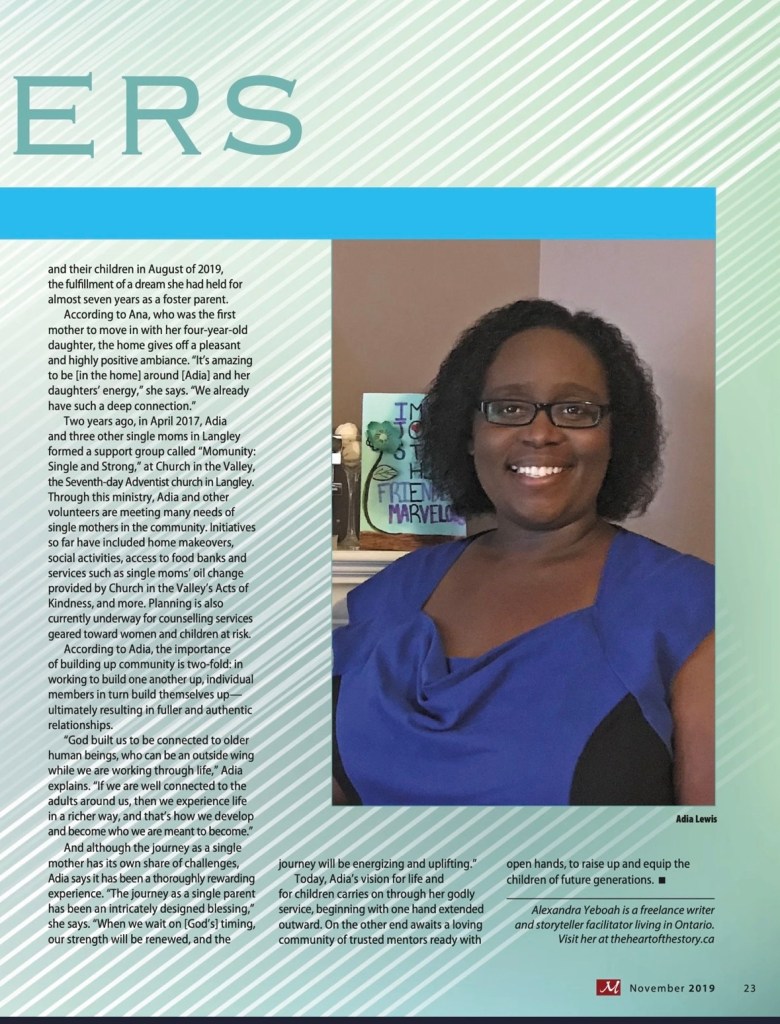
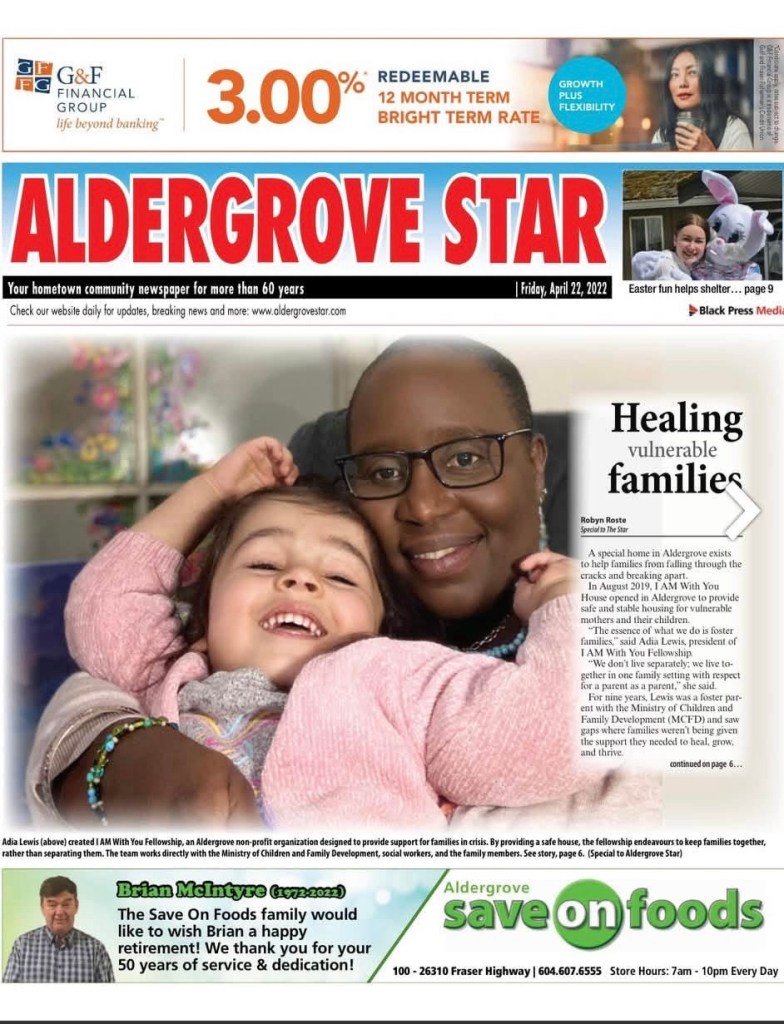
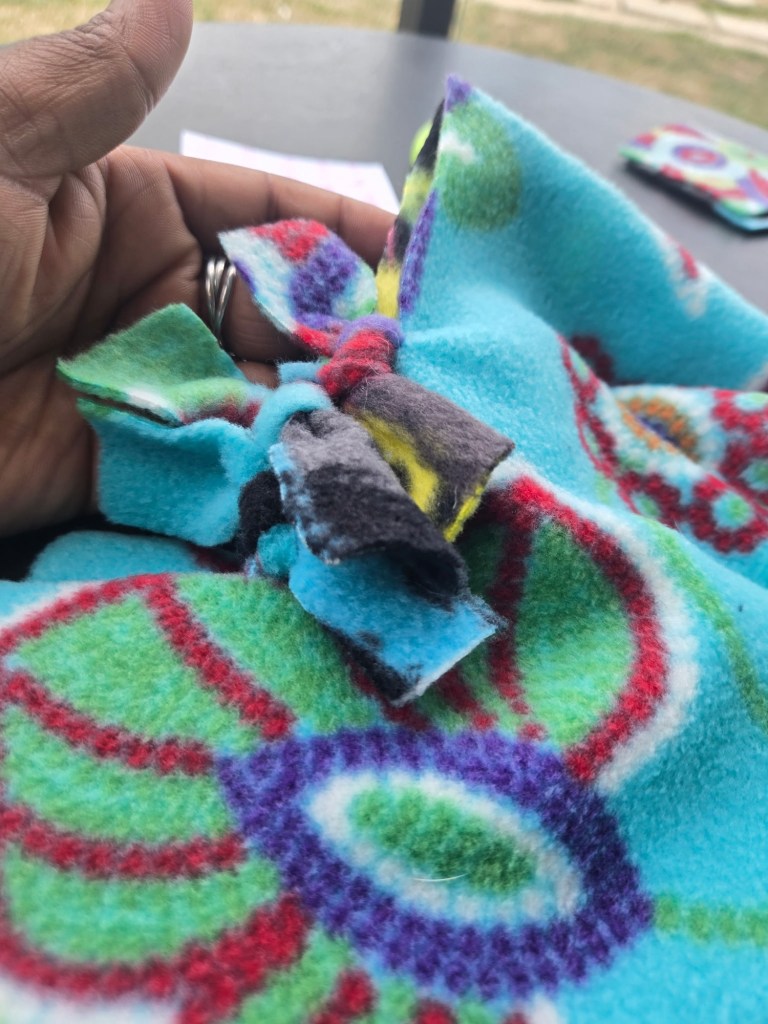
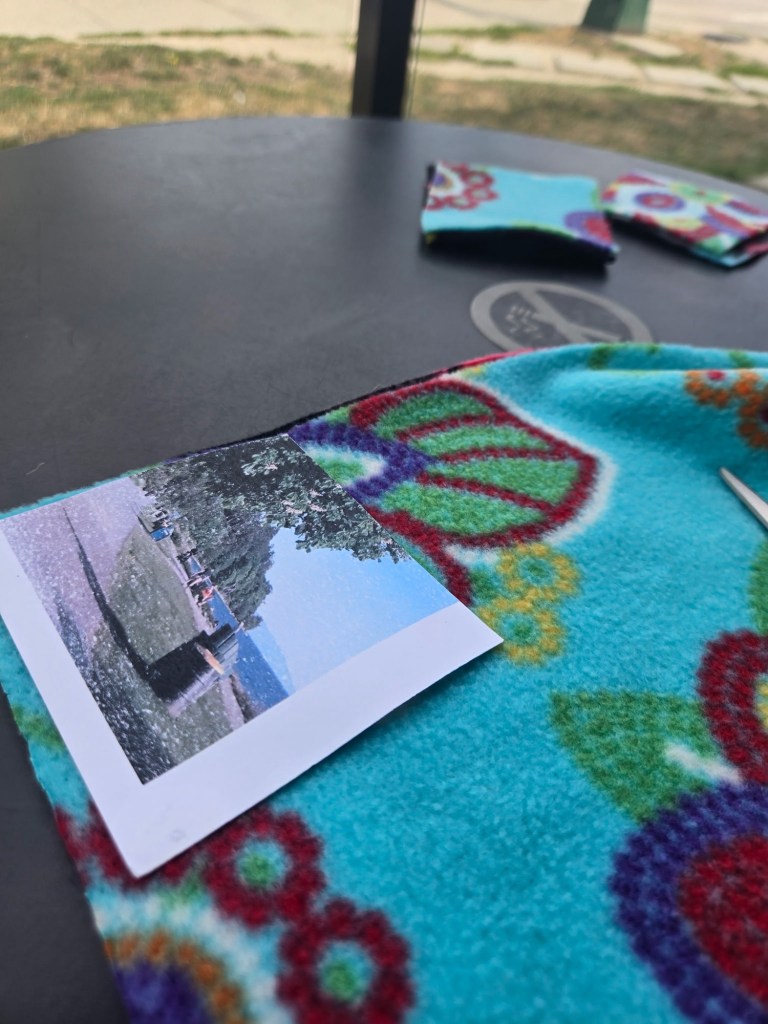
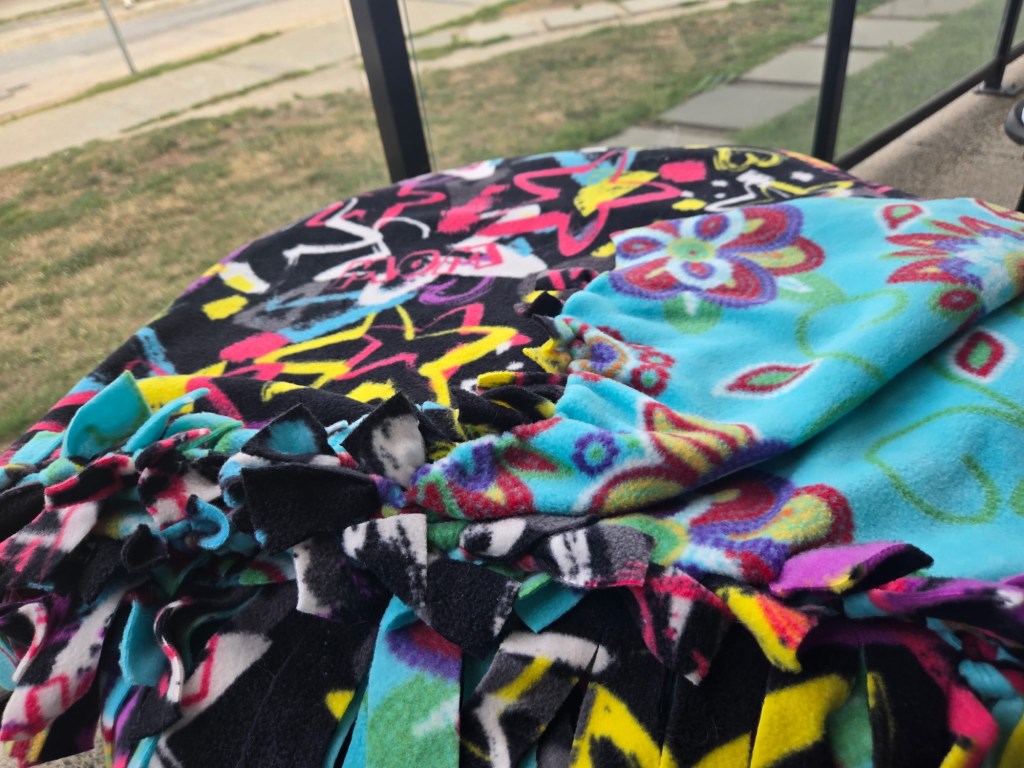



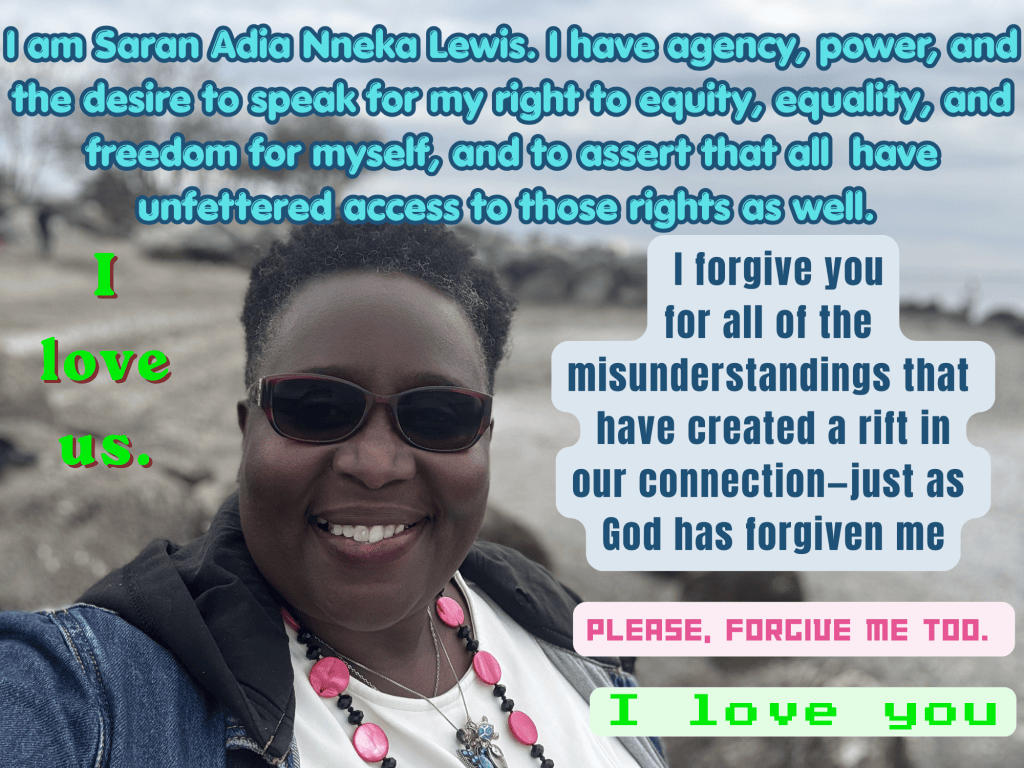





 Nurturing Kindred