
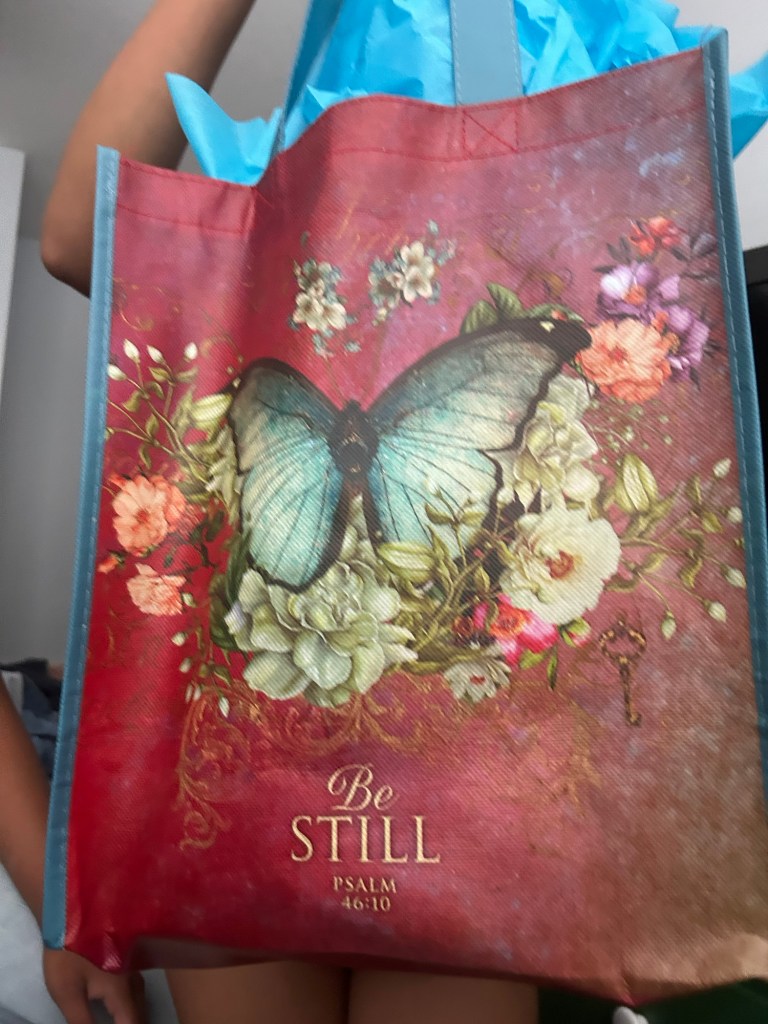
One week ago, as the last week of my forty-ninth year of life began, I awoke with the term learned arrogance conceived between my heart and mind.
And as I sometimes do when something is conceived—the fullness of whose life I can already see—I rushed it into birth. Then later, as I read it, I was so frustrated at its incompleteness. I almost threw it across the room as garbage, calling it “pretentious bullshit.”
Then that still small voice stepped in and suggested that just maybe it was a beginning—not pretentious bullshit at all—especially considering that tears had been pouring from my eyes as the words streamed out of me. They came straight from my heart. And as I reviewed them again, I knew there was more.
Here now is what has developed so far. I don’t know if this is all there will be, but I do know that these precious ideas born from love, hope, and faith will somehow be part of the healing that moves humanity forward—together.
So I have been contemplating it all more today, seven days later, on my fiftieth birthday, and this is the gift that has emerged.
Learned Arrogance: The Counterpart to Learned Helplessness
As a participant and observer of life and relationships, for many years I have witnessed nuances in interactions that have been destructive to the development of successful symbiotic mutually beneficial relationships on both interpersonal, and group levels. The element of helplessness has been highlighted and so has always been obvious. There seemed to be some thing missing though – some force which was just as detrimental but not named.
Then on August 23, 2025 as I watched a social experiment meant to teach a group of students how learned helplessness occurs, I FINALLY RECOGNIZED that the experiment also revealed the alternate state to which I have been extremely sensitive. It was learned arrogance.
Learned Helplessness tells us: “My actions don’t matter, so I stop trying.”
Learned Arrogance whispers: “My actions always matter, therefore I must be more capable than those who struggle.”
Both are distortions. Both are shadows born of systemic manipulation, social hierarchies, and wounds passed down through culture and history.
Where one is crushed by barriers, the other is buoyed by supports—but the supports are mistaken for personal superiority. Together, these two states create the illusion of natural hierarchies, calcifying into supremacy: classism, racism, sexism, ableism. Entire systems are built on the interplay of these shadow-states.
As Carter G. Woodson observed: “If you teach a being that they must enter only through the back door, they will build back doors so that they may enter where no back doors exist.” The reverse is also true: teach someone they alone deserve the front door, and they will see others’ attempts to enter as violations of the order of the world.
My Journey Through Both Shadows
This is not just theory to me. It is story. It is wound. It is healing. It is my lived experience.
My first encounter with helplessness came as a baby, when my cries were not answered. My parents loved me deeply, and they cared for me in countless ways—but they had been taught by those misinformed that independence was built by ignoring a baby’s cries as long as they were fed, clean, and had some measure of connection time. They silenced their own instinct to comfort, believing it was for my good.
In that space where connection was meant for healthy psychological and emotional and in darkness which was meant for rest, both helplessness and arrogance began to grow.
- Helplessness locked in with a sense of perceived abandonment: No one comes. I must not be worthy of being held. It’s dark. I am alone.
Arrogance, its defensive twin, locked in with survivalist contempt: I began to grow as is the natural process of physical development, and as I became mobile the arrogant seed sprouted: I don’t need you anyway. I will get there on my own.
And indeed, I did eventually get there—I crawled and then walk toward whomever I chose—but I arrived carrying a hidden contradiction: I am not worthy to be held, and I will be held by my own strength.
The viruses of shame, blame, and fear had already entered the system:
- Shame: I am not worthy of being held.
- Blame: It is your fault for not holding me.
- Fear: I am alone. I must protect and achieve by any means necessary.
These infections of the soul formed the soil from which both helplessness and arrogance grew. Both are seeded in the brain’s earliest foundations—in the consistency or absence of responsiveness from the little one’s big people.
This is the iniquity that wounds us to the third and fourth generation.
But arrogance came to me again in adulthood.
In 2005, after watching Blood Diamond late one night with friends, I was undone. The credits rolled after midnight, but I could not sleep. Rage coursed through me at the cruelty of humanity—how wealth and luxury are built on the backs of the youngest of us, whom we should cherish and guide to maturity, and on the backs of those deliberately dehumanized and diminished in the hierarchy of socio-political caste.
I stormed toward the stairs, speaking contempt and disgust to God: How could the world still be this way? How could I have lived nearly thirty years and not been able to do anything to change it? My words burned with arrogance, with sarcastic eloquence designed to scorch hierarchy to ashes—without concern for whether the person listening might be consumed in the fire.
And then, as clearly as day, I heard:
“They that wait upon the Lord shall renew their strength. They shall mount up with wings like eagles. They shall run and not grow weary. They shall walk and not faint.”
My birthday was approaching. By conventional measures of success, I had not “arrived.” Yet in that moment I realized I was both helpless and arrogant: carrying wounds of unworthiness that told me I could not change the world, and flames of contempt that told me I alone could see clearly enough to judge it. Both shadows lived in me.
That was also the moment I began to glimpse informed compassion—not pity, not superiority, but the possibility of meeting shadows without surrendering to them.
And even then, I was not walking alone. The cloud of witnesses surrounded me—siblings of blood and siblings of spirit, ancestors of blood and ancestors of spirit. They have expanded my definition of family beyond the limits of biology or culture. Some stood right beside me in flesh and breath. Others whispered through scripture, history, or memory. Still others were strangers crossing my path just long enough to remind me that God’s withness was embodied in human touch and human words.
I would not be who I am without them. Their presence—spoken, silent, remembered, or freshly met—became part of the golden thread that bound me back to life whenever shadows tried to convince me I was alone.
Chaff as the Pillars of Supremacy
Learned helplessness and learned arrogance are not just personal distortions; they are the very pillars of supremacy. They are the husks of wheat that never nourish, yet are still consumed. Empty and weightless, they take up space where the true grain of dignity and mutuality should be feeding us.
Because they are mingled with shame and blame, these shadows blind us to themselves. We learn to say: “That’s a those people issue”—projecting arrogance outward to preserve our own innocence. Or we internalize: “I am unworthy of love, even though I experience it”—the helplessness that keeps us locked in cycles of self-doubt.
We become stuck between the arrogant idea that the shadows belong only to others and the helpless despair that we ourselves are unworthy of love. The resulting fear of loss and abandonment feeds what the world calls impostor syndrome. And impostor syndrome, at its core, is not just about performance—it is the terror that even when we are loved, we will be left.
The unholy recipe of fractured relationships is this:
- Anxiety rooted in loss.
- Fear rooted in abandonment.
- Unworthiness rooted in shame.
Together, these shadows corrode trust and intimacy, creating cycles of brokenness that, unchecked, eventually lead to despair.
At the heart of this lies a dangerous theological distortion: the false teaching that God can only be with us in perfection. This subtle and dangerous shift turns the story inside out. It whispers that God resists our presence, when in truth it is we who resist God’s presence. It whispers that God withdraws when we fail, when in truth it is our fear and shame that withdraw us from God.
Supremacy is built on this lie: that worthiness must be proven, that love must be earned, that belonging can be monopolized. And as long as we consume chaff, mistaking it for wheat, the lie holds.
But wheat remains. Wheat is always there, waiting beneath the husk, ready to be ground into bread, ready to nourish life. The invitation of informed compassion is to face the shadows of chaff in ourselves—not to despise them, but to release them—and to make room for the wheat that heals and feeds.
Encountering Informed Compassion
And yet, even there—in the silence of the nursery—I was not abandoned. Though I did not know it until decades later, God was with me. The divine withness did not erase the darkness but refused to leave me within it. That presence became my first glimpse of what I would one day call informed compassion.
Informed compassion is not pity, nor is it sentimental kindness. It is the clear-eyed recognition that both helplessness and arrogance live in us all—twisted responses to joy and sorrow, love and cruelty, connection and abandonment.
It sees that light and darkness themselves are not the problem—joy and sadness are simply the day and the night of our humanity. The problem is the shadows—hatred, contempt, disgust, fear—born of evil’s distortions. Shadows that harden into helplessness or arrogance, stealing peace and fracturing relationships.
Informed compassion names these shadows without fear. It refuses the lie of hierarchy. It restores agency where it has been buried and limits where it has been inflated. It is the molten gold thread strong enough to mend community. It is the hand that separates wheat from chaff—not to discard what is human, but to make room for what can truly nourish.
Purified Gold
When, at last, we turn toward the God who has waited for us in the darkness, we find healing offered not just for ourselves but for generations. What was once wounding iniquity—passed down like a curse—becomes, in divine hands, a blessing extended to a thousand generations.
This healing is like kintsugi: wounds once gaping are now traced with purified gold. The gold is not abstract—it is purified in the fire of lived experience, filtered through love, poured as molten mercy into the fractures of the soul. This is the wheat that nourishes after chaff has blown away. This is the molten gold thread of informed compassion.
As I am now here at my fiftieth birthday, I no longer measure success by contrived standards. I measure it by peace—peace that could only come as God continues to heal the wounds of both helplessness and arrogance.
Therefore, every day, I choose life.
I choose to live by the purified gold of informed compassion. I choose to believe that community can be mended—not by denying our shadows, but by facing them, naming them, separating wheat from chaff, and letting them be transfigured into light. I choose to embrace the day and the night—the days of joy and the nights of grief—movement and rest that lead together to life, to reconciliation, to progress as a community mended with the molten golden thread of informed compassion.
Will you choose life and honesty too?
I imagine that the cloud of witnesses shined brilliantly that day as heaven celebrated with us all. Happy 50th birthday to me. May we wrestle with love, trust, and confidence.
I love you.


 Nurturing Kindred