
There was once a great house on a hill, built by a Master who loved every person who entered it.
The house had many doors, each one leading to a room prepared for someone to grow, rest, and learn to love.
But long before the current residents arrived, a whispering voice wandered through the halls.
It told the first occupants:
“The Master is holding something back from you because he wants to control you.
You are not safe here.
You must protect yourselves.”
And so the people began to close their doors.
The whisperer created a coalition of other whisperers, and they spent their time wandering through the house, whispering stories of discord and fear.
And so the people locked their doors.
As they repeated the whisperer’s stories about the Master, the room-owners began to be more afraid.
Then they pushed furniture against the doors and told their children that although the Master had made them a house, and made for each of them a special room, he was not to be trusted, because he withheld good things from them so that he could control them .
Soon each person lived in a private war, afraid of the Master and also afraid of each other, convinced that the others were aligned with the Master, and so were to be feared as enemies, not trusted as friends.
The whisperer never touched a single door.
He only told stories.
The people did the rest.
The Steward
One day the Master appointed a Steward—not to rule, but to serve.
She was given no keys, no authority to force doors open, and no power to punish.
Only this instruction:
“Keep the lamps lit.
Keep the hallways warm.
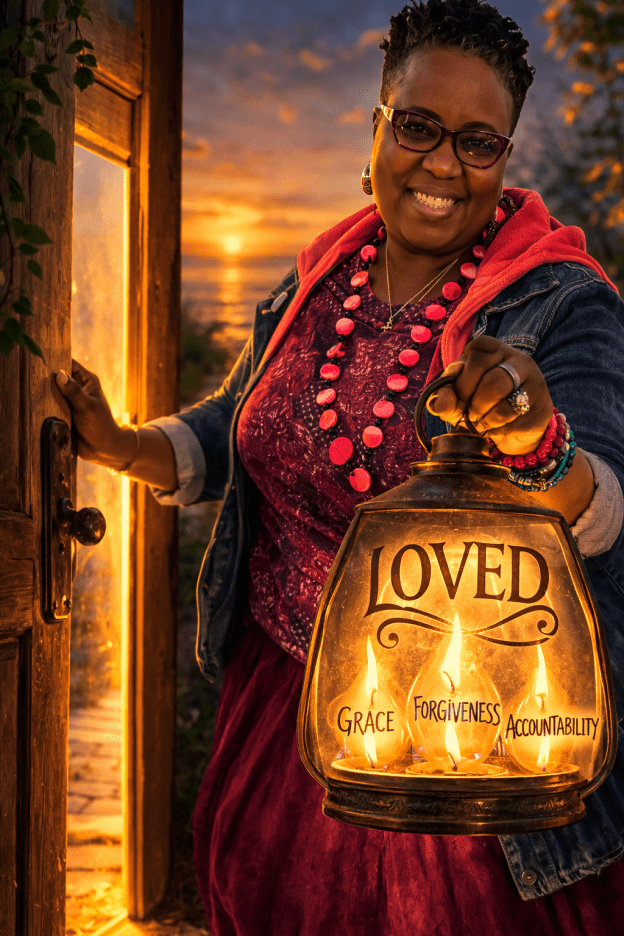
And when someone opens their door—even a crack—meet them with a love lamp.”
So the Steward did as instructed.
She cared for the lamps.
She repaired the hallways.
She filled the pantry.
She kept the house running even in the times when she believed the story that others had left her alone.
Sometimes the residents blamed her for things she had not done.
Sometimes they accused her of motives she did not have.
Sometimes she felt like they took without giving.
Sometimes she certainly got things wrong.
Sometimes she did not know what to do.
And each time, the whisperer smirked in the shadows.
The people behind the doors believed that she was aligned with the controller too.
The Steward’s Own Messy Room
What the residents did not know was that the Steward herself had once lived behind a locked door.
Her room had been cluttered with old fears, unhealed wounds, and the debris of stories she had believed about herself and others.
The Master’s Friend had come to her door many times—not with force, but with a gentle knock.
When she finally opened it, even a little, she expected anger.
She expected disappointment.
She expected judgment.
Instead, the Friend stepped inside with a lamp and said,
“You can be loved and messy at the same time.
You can be joyful and still learning.
You can be free and still growing.”
He helped her clean one corner of the room at a time.
He never rushed her.
He never shamed her.
He never compared her to others.
He simply stayed—gentle, kind, and clear—until she understood something she had never known before:
Love was not a reward for perfection.
Love was the environment in which transformation becomes possible.
And that is why she could lead with grace.
She had first been led with grace herself.
And she had learned to bring the stories to the light so that she could see what was true.
The Resident
One day a resident who had long kept her door shut felt a strain in her heart.
She remembered the Steward’s patience.
Her invitations.
Her quiet care.
And she opened her door—just a little.
The Steward was there, lamp in hand.
“I’m sorry for the places I hurt you,” the Steward said gently.
For the Steward had learned something important from the Master’s Friend.
During the period of time when her own heart had been locked in fear, she had blamed the Master for hurting her. Yet the Master had received her anger without abandoning her.
The Friend had told her about the Master’s Son who had once lived in the house.
The Son had tried to love the residents openly and clearly.
But the whisperer convinced them that the Son had come to steal their freedom.
So they turned on him and drove him away.
As the Steward listened to the story, she realized how wrong she had been about the Master.
And she understood something else.
If the Master could love her while she blamed him, then she could offer grace even when she was misunderstood. And she could take responsibility for those times when she had been wrong too.
The resident’s eyes filled with tears.
The Steward’s apology made room for her healing.
From that day forward the resident began to grow.
She learned to lead her own household.
She learned to love her children with wisdom.
She learned to build traditions.
And slowly she opened her door wider.
The Steward rejoiced—not because she had been proven right, but because love had done its work in the Resident just as it had done its work in her.
The Master’s Return
When the Master returned to the house, he found the hallways warm, the lamps burning, and many doors open.
He smiled at the Steward.
“You have understood my heart,” he said.
“For I did not condemn the world; I only wanted to save it through love.”
When the residents heard this, they opened their doors and peeked shyly into the hallway, wondering if the Master would truly welcome them.
The Master’s light filled the whole house. And as he was joined by the Son and the Friend, light danced throughout the entire house.
And as the light spread through every hallway, the whisperer fled—for everyone could finally see that his stories were not true.
Oh, how beautiful it would have been if the whisperer had accepted love too.
The Lesson
Freedom did not come from locked doors.
Freedom did not come from blame.
Freedom did not come from hierarchy or control.
Freedom came from the heart of the One who taught the Steward
to love herself in her mess,
to clean her room without shame,
to lead without superiority,
to submit without fear,
to love without condition.
And so it became clear to all who lived in the house:
The Son had come to set the residents free.
And whom the Son sets free is free indeed.
This is not just my story. This is our story.
And it is such a precious thing to see the whisperer’s stories unravelling as more and more of us hold the stories up to the light, and experience love through grace, forgiveness, and accountability.
 Nurturing Kindred