Author Archives: Saran - meaning: Joy, refuge, sanctuary

Unknown's avatar

About Saran - meaning: Joy, refuge, sanctuary

I have found love, and I live to share it. I have lived through and spoken peace to many big storms, and life has been beautiful. I believe that our individual stories are important building blocks in the beautiful communities that life was meant to be. For it is only when we share our stories, with deep compassion first for ourselves and then for each other, that we recognize that we are not alone, we are not very different, we are and have always been very much the same at the core - souls seeking to shine and enjoy the light of all others as we move through this human experience: “We’re only human and we’re looking for love... Human by Her Brothers. “ I believe in love, in the pure love modelled by Divine I AM, which is expressed in myriad ways, and in all ways is always perfect. https://youtu.be/KxluyC3JdCQ

Grief: The Golden Glue That Creates Masterpieces from Ashes 

By Saran A. N. Lewis

Every painful moment of my life was worth it for the conception and delivery of these thoughts.

This week, my whole self was filled with tears and sadness as I read Paul J. Henderson’s article about Chantelle Ruhl’s profoundly unfair and tragic death.

It gives me great joy and peace to know that God did not—and would never—orchestrate pain to teach us. He has been with us through the pain caused by human choice, so that we could survive, heal, learn, grow, and eventually thrive.

God keeps hoping that we will mine deeply to find the treasure of grief.

Chantelle Ruhl didn’t have to die this way, and David Dalton Knox could have chosen to lean into love instead of continuing to recklessly harm others.

Read the article here.

And what about us?

How are we learning to live profitably together?

🦋

The Call to Grieve

The Spirit of Love persistently tries to calm our anxieties and challenge our judgments so that we can sit and discuss the issues that cause us pain. The Spirit of Love persistently invites us to lean into connection and conflict resolution so that we can reach peace and acceptance, which are so much closer than we think.

As I read this article, my whole self filled with tears as I thought of the factors that create the version of each person who shows up in the world. Seeing that at the core of every person is innocence yearning to be known, loved, respected, and connected productively with all others—it is devastating to witness how fractures in connection create such monstrous outcomes, where one person becomes so accustomed to caring only for their own survival that they could knowingly destroy, negatively affect, or end other lives.

It is heartbreaking to see this pattern play out in relationships all around us—as families, friendships, tribes, communities, countries, and potential partnerships are repeatedly broken by ego.

🥺

The Lament of Love

I understand Jesus’ tears as He wept over Jerusalem and said:

“O Jerusalem, Jerusalem, the city that kills the prophets and stones God’s messengers! How often I have wanted to gather your children together as a hen protects her chicks beneath her wings, but you wouldn’t let me.”

— Matthew 23:37

This verse was part of Jesus’ final message in person to Israel. It was a lament—a deep grief that we refuse to be gathered together to learn how to move forward as one in love.

Dear ones, to get there we must learn how to grieve and set aside ego so that we can listen to each other, and heal, grow, and live together—with our differences and similarities creating the one-diversely-full world that God intended to inhabit with us.

Not one drop of rain, not one snowflake, not one bird, fish, or flower is identical to another, and yet together they form the most infinitely amazing tapestry of life.

What about us?

🥰

The Process of Returning to Love

I once said to a friend that people who rape people don’t rape everyone. Painful experience has taught me this.

Moving through the process of healing attached to that and other sources of pain has taught me these things:

My interactions with a person do not define their interactions with everyone else.

I have learned to think this way about all of us as human beings and to be open to the idea that people who do very wonderful things are also capable of doing very horrible things—all people. Every single one of us.

I’ve learned to assume that there is always some underlying factor that causes people to choose to harm others.

I have learned that the version I hold in my mind of each person either cleanses my soul or erodes both my life and theirs. 

Therefore I am learning to take care of my own healing with God, while letting God take care of the healing of those who harm me—instead of seeking vengeance.

As a part of that process, I have moved through these phases with deep gratitude to Elizabeth Kubler-Ross for her work on grief, and as I grieved I seem to have found more:

1. Being frozen in denial — literally.

2. Unconsciously bargaining with them to be safer or better through positive engagement.

3. Disgust and contempt

(a) Wishing that they would shrivel up and die because of how they’ve harmed me.

(b) Ruminating on ways to punish them so that they also feel pain.

(c) Attempting to initiate a process of punishment.

(d) Resolving that I am better than they and will leave them to God.

4. Depression — recognizing that punishment does not alleviate pain; slowing down and feeling the deep emotional wound as my brain shuts down all processes that are not needed to survive, so that I can rest.

5. Sadness — recognizing that punishment is not really what I want. I am mourning the pain and injustice of the situation.

6. Anger — realizing that action needs to be taken to put safeguards in place to protect myself and others.

7. Conferring — avoiding direct engagement with the offender, instead seeking conference (also known as gossip) with others to perform a forensic autopsy of the situation.

But Jesus redirected me from avoidance to engagement in one to three steps in Matthew 18:

“If your brother or sister sins, go and point out their fault, just between the two of you.

If they listen to you, you have won them over.

But if they will not listen, take one or two others along, so that every matter may be established by the testimony of two or three witnesses.

If they still refuse to listen, tell it to the church; and if they refuse to listen even to the church, treat them as you would a pagan or a tax collector.”

— Matthew 18:15–17

The steps to healthy conferring are:

I. With the offender, if they are safe and willing. (If they are not safe, leave and heal with God, as Jesus did when He left Nazareth.)

II. Intervention with the offender and one or two significant others—people who love and respect both parties—if they are willing.

III. Community reflection with a larger group of people who love and respect both, to examine facts and invite the offender into a supported process of healing and accountability so that they will not re-offend.

8. Acceptance — I have done everything I can do.

9. Finding meaning — discovering what new value can be brought to the community from the lessons learned.

10. Coming home to wholeness, and the fullness of myself in connection with all, which leads to 

11. Creation — building a whole new dimension of community engagement with the tools and resources acquired throughout the process.

In this way, the kingdom of love is built, inhabited, and infinitely expanded on Earth as it is in heaven.

And if we wonder how often we should move through this process, Jesus also answered that question:

“Lord, how many times shall I forgive my brother or sister who sins against me? Up to seven times?”

Jesus answered, “I tell you, not seven times, but seventy-seven times.”

— Matthew 18:21–22

If we’re wondering whether it is worth it, look around us at the pain and suffering—and find the answer.

🤯

The Nature of God Revealed

This experience of being guided through forgiveness is also what led me to recognize that God wants us to know that He is not whom we thought He was.

He never harms.

Never kills.

Never punishes.

And never will.

He is always with us—encouraging, comforting, and providing for us as we move through the often painful consequences of our own choices and the agony of being harmed by others.

Jesus was willing to die to help us understand that when we connect to conflict resolution through Him, love wins. And as we grow we become lovingly competent at leaning in to the paradox of peaceful leadership. 

🫶🏾

The Paradox of Peaceful Leadership

I have observed that people often become confused and tense when they encounter a leader who will not boss them around, micromanage them, punish them for inaction, or actively or passively exclude anyone.

This confusion can arise even when that leader is clear about the vision and consistently supports the success of the team with well-defined boundaries and collaboration that welcomes conflict resolution and shared struggle.

And yet, when leaders do the opposite—when they micromanage, rely on systems of punishment and reward, or foster triangulation and competition—followers often perform with what appears to be efficiency.

The wonderful irony is that being supported without dominance, punishment, or exclusion ultimately has the deepest and most lasting impact. Love and kindness have a way of calming dissonant nervous systems and restoring trust—eventually.

Although initially being loved may create panic as the nervous system reacts to unfamiliar safety, over time, as recipients process safety and belonging at their own pace, growth and innovation begin to flourish.

A true community is formed—one built on the foundation of genuine freedom, compassion, and mutual respect.

Conversely, while fear-based systems may appear to flourish for a season, the underlying anxiety they produce inevitably leads to stagnation, burnout, and the quiet erosion of community.

The treasured truth I have mined from this observation is that, against all odds, love wins.

I hold hope that we will awaken to this reality and begin to lead, follow, and consistently engage more comfortably with love.

Jesus lives as a beacon of light to testify of this.

Viva the Loveolution.
Fear, Silence, and the Call to Glory

I LOVE THIS!! https://youtube.com/shorts/y_Y_EbzAzjk?si=YAoP-arkuOJf8eUH.

Carney apologized to Trump because as a responsible leader he recognizes that protecting reputation and doubling down on rightness has never been the way to pave the path to peace and collaboration.

I love this because as a recovered gossiper – ten years in recovery, and as a new keeper of the space and hearts – as a nurturer who has done the very hard and very expensive work of learning to listen from my heart I know exactly how difficult it is to apologize and to hold space, while making space for grief – my grief- and the grief and fear of all others to flow.

I know how excruciatingly difficult it is to get to this place.

I know how excruciatingly painful it is to accept persecution and injustice, and still stay in, and/or circle back to love.

Maturity and wisdom begin to recognize that seeking accountability and building a way forward isn’t made better by grandstanding even if one is right.

An apology given because an apology is craved fills a need. It builds space. It’s not about being right or wrong. Perception – experience is everything. Therefore, instead of fighting and right defending, I have found that accepting the idea that my good intentions were not clearly communicated, and that some sharp edge which I missed in the humanness of expression and interaction caused harm.

Offering an apology creates space for all involved to process from grace and healing. It says, I see you. I value you. I wounded you.

This knowing gained as God has accompanied me on an Emmaus walk through life has helped me to be patient with life that very often feels like a fiery furnace. And when I flow out of peace my Baba Ndiri’s coaching helps me to circle back to peace, and to extend peace in spirit to those whom I would have previously cut flat down with my fiery tongue, and whose opportunity to connect I would have burnt to ash in the incinerator of forgetfulness.

To do this, I had to learn how to cry again.

Vulnerability matters.

This past summer as I watched the days go by, Camp-meeting approached, and the administration of the Seventh-Day Adventist Church remained silent, regarding the concern about convicted sex offenders attending Camp-meeting, I came to social media hoping that it would spark conversation and progressive momentum to protect children and create space for connection and rehabilitation for known and convicted sex offenders who would usually attend.

I’ve been praying that some positive action is being made even though fear and survival mode flight, freeze, fawn, fright, faint, or flock kept the administration from acknowledging my expressed concerns.

I had already apologized a few weeks earlier for not communicating as clearly as I thought I had. My words had caused them to feel afraid — afraid that I was threatening them with public exposure — when in truth, I was seeking accountability and discussion, in the loving process of truth and reconciliation, for something which they feared would ruin their reputation.

And that is an understandable fear because they are human. In general human interactions survival mode driven by fear is real. Blame and scapegoating driven by shame are real. Gossip is real — and we all fear the sting of gossip as much as we fear the bite of a venomous snake. Gossip has long been used as a weapon of war, wielded against opponents in a right-fight. Yes, war. A right-fight with reputations deliberately left shredded on the battlefield.

And there is a profound difference between a right-fight and a focused, private invitation to the table of truth and reconciliation.

We rarely acknowledge that when we tell our version of a story — with all parties deliberately individually identified — to people who are not at the table to facilitate reconciliation, our intention, whether we are conscious of it or not, is to gather an army. And that army’s mission is not healing. It is the social assassination of the other.

I recognized long ago that there has likely been a campaign of disinformation set in motion to discredit and alienate me in order to protect their reputation.

I just keep singing glory over it all, because my job is to nurture and encourage growth in integrity, while holding space for connection and healing someday.

“Glory” is the song that God began to sing with me in victory which is already certain.

I shared this song and prayers with them throughout the communication process which began on February 6, 2024 when I made the first step towards seeking restitution and reconciliation.

And as I have processed with God, and waited until the fullness of it all dropped back down to my heart, as I moved through Jesus’ prescribed accountability process I have been able to tell the story publicly to the general population to help facilitate restitution while I wait for the victory of reconciliation.

Victory will be to see relationships restored, healthy forums to wrestle with truth and reconciliation created, with grace, hope and love at the core, so that the truest profit of healing and wholeness as it is in heaven can be experienced here and now on Earth.

“…The biggest weapon is to stay peaceful
We sing, our music is the cuts that we bleed through
Somewhere in the dream we had an epiphany
Now we right the wrongs in history
No one can win the war individually
It takes the wisdom of the elders and young people’s energy
Welcome to the story we call victory
The comin’ of the Lord, my eyes have seen the glory
One day when the glory comes
It will be ours, it will be ours…(Common and John Legend, Glory)

We are not interested in exclusion, or in public executions with children seated to watch.

That kind of culture is what allowed children to stand, posing, smiling, beside the dangling, charred bodies of lynched and tortured men and women as if the gruesomeness was an acceptable norm.

We seek healing, transparency, and transformation now, on Earth as it is in heaven.

We are here. Diverse. Equal. Included.

Glory.

https://youtu.be/HUZOKvYcx_o?si=c3S7C9C22JVOCgg4

Forgiveness – The One-diversely-full Way.

For the last fifty years and especially these last five I have been on a forgiveness journey. But I did not know that it was a forgiveness journey until I knew.

Until I saw it with my own eyes, not once, but again and again, and finally experienced it for myself, I would not believe that it was what it truly was.

So I have learned to forgive, and to extend my hand to one person at a time, like the little girl on the shore who kept throwing starfish back into the sea, even though hundreds lay stranded. One starfish at a time, with irrepressible faith and hope in God’s resurrection power.

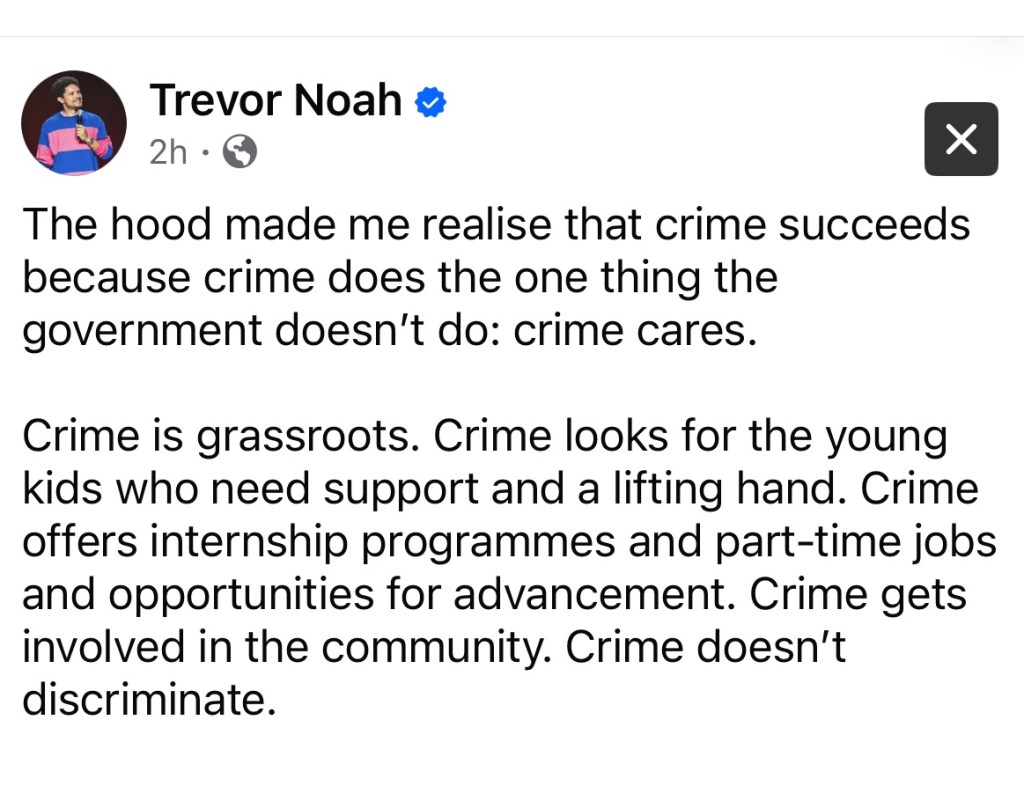
Church made me realize this.
Church succeeds because church is religion’s gathering place, and religion does what crime does.

It does what God asked community to do, but we do not do.

And I saw that religion also does the things which crime does which God asked us not to do.

I learned that religious leaders will discard you in the blink of an eye to protect their profit, without discrimination, no matter who you are.

They will gossip, scheme, and smear those who threaten the system that feeds them.

I learned that religious leaders will ignore children being harmed until it directly affects their image – which affects their profit. I learned that religion really does not care what happens to the children. When I cried and reached out to them about how children were being harmed by sexual predators in our religious community they remained silent.

See Oprah’s interview below with child sex predators to understand why I have such deep concern about the Seventh-Day Adventist Church’s lack of response about child sex offenders attending camp-meeting.

There seems to be no real plan to protect and empower children, inform and empower parents, and safely rehabilitate offenders.

https://youtu.be/vmwQd3mw5pw?si=SNov2glvTi4S4DJi

Until I saw and experienced it for myself, I thought that the Church was a caring entity – the real way.

But Jesus shows us the true Way, and reminds us that this Way is already within us.

We have forgotten it.

And so I began to look around the world at all the places that religion had told me were false and dangerous. And I found that in many of those places the real way was alive and well.

At first I was livid. I felt betrayed. And I had been. We all have been.

But then I sat with God and asked why? And as the science of the why unfolded more and more, day after day I began to forgive us for being so harmful.

Yes. Us. Not them.

I began to see that like a broken clock we are all right at least twice per day. Every day. Daily.

And in many other ways we are so very broken and misinformed.

We. Yes. We. Not them.

And as God kept assuring me that They are with us all on our journeys of healing and discovery I began to explore more courageously. I began not to look just at “them” but to look at me.

And as I looked at me I understood why Yeshua asked us to first love the Lord our God with all our heart – because in the shelter of that love we can finally face ourselves without shame.

And as we face ourselves without shame we completely lose the need to blame

And as we lose the need to blame we begin to see ourselves through the science of being human, and we understand why we do the things that we do.

As we understand why, we find better ways of meeting our needs. And as we meet our needs we begin to love ourselves again.

And then when we love ourselves we can finally love others with the same kind of robust hope and encouragement with which we love ourselves.

And as we begin to love ourselves, we begin to find more and more golden threads of informed compassion, purified through the fire of courageous examination.

Then we finally begin to repair the broken fabric of our oneness in community with the golden threads of informed compassion.

And together, we can return to the Way of thriving, truthful community, because we finally remember whom we really are.

That is why I share what I have seen and learned in scripture, as I have experienced it through the life of Jesus.

God is calling us to remember.
To awaken.
To be loved. 🥰

Viva the Loveolution.
I remember, and I forgive us for not knowing what we have been doing.

Rising Together: Reflection on Worth, Choice, and Divine Alignment

“Emotions don’t carry you very far.”
— Mark Carney

He is right. What propels us is not emotion, but our choice to be actively growing together – moving us with love for each one forward with hope and resilience, all grounded in our intrinsic, inestimable worth and worthiness, which remain constant even when storms assail us.

Emotions are messengers, signaling where reflection, reconciliation, and alignment are needed; they are not engines of action. Choice is.

We are meant to choose our direction with confidence, hope, and trust in our ability to restore balance in connection with one another and with the Divine. True trust arises when choice is exercised in alignment with the intrinsic dignity bestowed upon every being.

Do we know our worth? Our perception may fluctuate, but our actual worth does not. The Son of God revealed that even if human voices fall silent, creation itself — the rocks and stones — will bear witness to our dignity. This is not only about Him, but about us: our identity, our life, our participation in creation’s ongoing testimony. Worth is inherent; experience of worth is relational and chosen.

When we disconnect from divinity, our perception becomes thorned, life appears as pain, dominance, and subordination. Through free will, we can realign with our intrinsic worth, transforming thorn into blossom, oppression into flourishing, and isolation into communion. Our choices determine whether we reinforce tombs or roll stones away to facilitate resurrection, renewal, and collective life.

Every thought, word, and action leaves an energetic imprint. Even stones, rivers, and trees participate in moral and spiritual reality, reflecting and responding to the orientation of human hearts. When our choices honor life, love, and relational reciprocity, the universe itself echoes that alignment back to us. When they serve supremacy, separation, or self-exaltation, the field of experience hardens, and the living truth of worth is obscured.

Our environment is responding to our energy. When we collectively say peace be still in alignment with our divine Creator, the elements themselves respond with balance. They become calm.

This is why it is so important that we examine the Bible through the life of Yeshua M’shīkhā.
Yeshua reveals how human interpretation, affected by the tares of supremacy, created the experience of empire and colonization — conquest, punishment, pain, and separation, the assertion of one over another instead of with in all the systems of our lives – in politics, religion, parenting, marriage, education, business, healthcare, friendship.

Instead of rising together in life, we have been conditioned to believe that to be profitable as our full selves someone else must sacrifice their life, their freedom, their choice, their equality.

Yeshua came to show us that God-with-us is all and only love — love that honors choice and creates space through respect of free will. This divine orientation allows reconnection with the assurance of continued life through resurrection, even when harm that seems to end life is inflicted, because the choice to remain inseparably with God transforms experience and restores alignment with intrinsic worth.

We are called to rise together, not in isolated ascent but in mutual flourishing. Every civilization, ancestral lineage, and spiritual tradition teaches this: human dignity, relational ethics, and community are inseparable from the experience of life itself. To rise alone is to risk collapse; to rise together is to co-create resurrection.

Practical applications:
1. Daily reflection: Pause to ask, “How am I perceiving my worth today? Am I responding to emotions as messengers or as engines?”
2. Choice awareness: Notice moments where fear, shame, or anger distort perception. Pause, breathe, and intentionally choose action aligned with intrinsic worth.
3. Relational calibration: Seek opportunities to support, elevate, and witness the worth of others, reinforcing the communal experience of dignity.
4. Energetic engagement: Acknowledge the living presence of creation in daily life. Actions that honor life, mutuality, and care contribute to a field of flourishing; actions rooted in dominance or separation reinforce barriers.
5. Christ-centered practice: Reflect on Yeshua’s example — practicing love that honors choice, creating space rather than control, and trusting in resurrection and restoration even when circumstances appear destructive.
6. Communal practice: Participate in rituals, dialogue, or creative acts that embody rising together, rolling stones away, and co-creating spaces for life, justice, and restoration.

May we rise as one-diversely-full, not to dominate, but to co-create life, to bear witness to worth, and to honour the sacred trust inherent in every being.

Shall we rise? I believe that we can – together – one-diversely-full. Tare free; with true liberty and justice for ALL.

Faith, F*cks, and Flexibility

Photo credit 📸 Patrick Kool – People Dancing by the Seashore (unsplash.com)

Our hearts yearn for the freedom to be fully ourselves, to be loved, seen, and accepted as perfectly so. Yet we have been taught to fear our own reflection, to call our anxiety discernment and our defensiveness wisdom. Freedom began to appear for me when I finally felt safe enough to pause and examine those distortions with honesty and compassion. In that quiet, grace began to teach me a different way to see. Love became flexible, and freedom unfurled where fear once ruled.

So often we run from relationships that could be mutually nurturing and empowering. We project our anxiety onto others and call it intuition. In truth, what we need most is to pause and release the weight of enmeshed vicarious pain and personal trauma.

And this is where the f*cks live.

The f*cks are the moments when anxious anger rises up and blame turns on full blast, when the old fear of being unworthy grabs the wheel and drives us straight into rejection, contempt, and withdrawal.

It is the reflex that shouts, “YOU GET OUT OF HERE,” when what we really mean is, “I am terrified. I need to find safety.”

It is the reaction of moral certainty, masquerading as divine discernment while it is really just fear trying to sound holy.

That eruption, that flash of defensiveness and fury, is not proof of failure. It is a signal. It is the threshold where honesty and healing meet. The f*cks are invitations to pause, to breathe, to remember that we are not being asked to be perfect. We are being asked to stay. Stay open. Stay in peace. Stay in hope. Stay in trust. Stay to wrestle through conflict together.

And when the shouting stopped and I stayed long enough to listen, I began to see the root of it all.

The feeling of being unworthy does not sit quietly inside us; it seeks an external cause so it can make sense of its own pain. Looking inward feels dangerous because we have been socialized to believe that people who make mistakes, people who fail to be “good,” deserve judgment and punishment. Many of us were taught that to fall short is to risk eternal separation from all that is good. That belief is the root of shame and the barrier to grace.

We cannot heal what we still believe makes us unlovable. We cannot heal while we are thrashing around in blame.

The moment we pause to see this, the courage to examine our distortions honestly becomes the beginning of freedom. Self-examination is not punishment; it is liberation. Turning inward not to condemn but to understand opens the door to self-compassion. Honest reflection becomes a sacred act of reclamation, transforming inherited fear into holy curiosity. When we choose to face the distorted beliefs that shaped us, light begins to pour through the cracks, and the path to peace unfolds.

When the heart has learned to pair safety with danger, even genuine care can feel threatening. It becomes easy to misinterpret healthy closeness as control, because our bodies have not yet learned to recognize safety without fear.

As we grow in self-awareness, we begin to see how our personal distortions shape the collective we build. The healing of one heart ripples outward into the systems we inhabit.

I eventually realized that I needed to sort through my personal rules of engagement to see which ones were boundaries and which ones were expectations. Someone once said that expectations are premeditated resentments. That truth stayed with me, because resentment is the seed of contempt, and contempt destroys relationships.

Someone else said that boundaries are the things that each person decides they will and will not do. That truth stayed with me too. Sorting my boundaries from my expectations has helped me to be less annoyed and much clearer about who I am, what I will do, what I will accept, what counts as a human right, and what simply reflects personal preference.

Now I know where I can be flexible, even when the experience does not meet my preferences, as long as I am not being harmed.

In this realm, this human world where we have not yet learned to face our shadows without defending with disconnection and blame, it is so important to recognize that we have not yet collectively learned how to be gracious.

We have not yet learned how to extend grace, which is the flexibility that feels no offense at unmet preferences and expectations, while keeping our boundaries protected by love and the power of choice.

When we can finally protect ourselves with love and the power of choice, we will begin to be open to the experience of peace, the experience of accepting and even enjoying different preferences that cause no harm.

I can barely wait for us to get there together.

God is patiently teaching us, even willing to endure human cruelty so that we could learn what love truly is.

For God did not send His Son into the world to condemn the world, but that the world through Him would be saved.

— John 3:17

When we are finally free fucks can just be fucks, emotion full of fire and heart as we live in the grace-filled freedom of flexibility.


I must preface what I am about to say with this clear declaration: I do not accept the colour-coded identity of ANY people. Colour coding is part and parcel of the system of White Supremacy under which human beings were separated into “races,” creating racism as a tool of control and profit.

Therefore, when I speak of Black and White, I am not bowing to the system. I am inviting us to awareness of the cages in which we have been bound—so that we can SET OURSELVES FREE.

Acknowledging racism (or any other form of supremacy) does not weaken a community. Denying it does.

Real progress comes when leaders, neighbours, and institutions have the courage to face what is real: that we are equal in human worth and capacity, but not equally or ethically resourced or supported.

To move forward as a healthy community, we must not only refuse the myths of White Saviourism and Coloured Helplessness—we must also confront the shadows of superiority and inferiority, dominance and subordination, dismantling the structures that keep resources, relationships, and opportunities unequally balanced.

When we can finally do this we will be free. And only then can we begin to live the divine dream of building communities founded on wholeness, worthiness, authenticity, love, and belonging.

The recent attacks on the character of Black people—and especially of Black women, so-labelled within the system of White Supremacy—are not random.

This is strategy. A diabolical strategy of elite White patriarchs—those who profit most—to rebuild the foundations of White Supremacy. Foundations that were shaken when a six-year-old Ruby Bridges walked bravely through mobs of rioting White mothers. Mothers who, unrestrained, would have strung her up as “strange fruit,” just as their forebears had done for generations.

That foundation has kept on shaking. It splinters every time Afro-descendant women refuse to let “Black” be the final word of erasure and containment.

Our children, unseen as valuable, were expected to be left starved of love, affection, and connection—while our bodies, our minds, our labour were used to nurture theirs. Then our children were gaslit into believing that White mistresses—those who have not examined their supremacy, superiority, and privilege—were heroes for tossing a few crumbs of charity while preaching respectability.

No! Absolutely no thank you.

As our foremothers resisted, so too have we resisted—standing tall and fighting like lionesses to love and nurture our children too. We taught our children that they were already respectable, already worthy, already whole as themselves. And our children rise. Yes, “like dust they rise.”

So now, suddenly, Dr. King is recast. They say he cared more about race than about character. As if race is not the millstone tied around the neck of our children—intended to strangle their dignity, forcing them into the role of beasts of burden—worthy only of crumbs.

And here is the truth that makes them afraid: the women who used their intellect and wisdom to raise White children produced intellect, resilience, and the courage of agency and self-advocacy in their own children and households too.

Against all odds, we raised their children and our children too. And the children whom we touch bear resilient fruit. A hundredfold.

That fruit scares them. That fruit is still here.

And so when we stand up and insist that our children must also receive their birthright of education, opportunity, dignity, and love—we are not asking for favours. We are claiming what has always been ours. We are naming the lie, breaking the pattern, refusing the crumbs.

We are declaring that the time of scarcity, shame, and silence is over. That the fruit of resilience and self-respect which our foremothers planted—and which we have also planted—will no longer be harvested for others’ gain but will nourish EVERY CHILD in our communities.

And to be clear, as an Afro-descended single mother, I also wrap single mothers in this blanket of truth, and invite us to lift our arms in resistance and praise in bold divine defiance against the patriarchal supremacist rhetoric that seeks to diminish the power of our influence in our children’s lives by quoting statistics of failure in single mother households- as if the lionesses were failing!

We work twice as hard to lead and support our children because communities that have been designed to idolize marriage and worship the traditionally defined nuclear family ABANDON the children of single mother lead families.

In the testimony of our lived experience this is more than unconscious abandonment and exclusion. We have experienced the reality of teachers and religious leaders explicitly advising the children of nuclear families to steer clear of relationships with the children of single mother households.

We have experienced the reality of married mothers excluding our children from their children’s social lives expressing fear that our children will contaminate their children’s delicate sensibilities – while those children bully and torment our children into despair.

Then when our children naturally refuse to be a part of communities that have degraded them, the religious establishment uses their absence to generate statistics which assert that the presence of fathers in religious gatherings with their families is a high predictor of “successful” attendance at religious gatherings.

If only the establishment recognized that attendance at the building designated as holy is not indicative of connection to the character and heart of Christ!

In three days of the attempted destruction of THE temple, Yeshua/Jesus raised the temple up again. The apostle Paul even very clearly informed us that he had come to recognize that human bodies – not buildings – were the temple in which the Spirit of divinity dwelled.

SO single mothers we rally together, and elevate our children’s understanding of their worth in the divine order of things and THEY thrive. If we create community together and honour the value of that community as Christ honoured the children who recognized how much He did with what THEY offered him, we would be well.

Our intimate romantic relationships would not be seen as legitimizing our honour. We would simply enjoy such relationships because we wanted to do so!

We have long recognized that we are better together – in community – and so the Single and Strong Momunity which we built from the ground up has just grown bigger with the inclusion of romantic partners. Not better. What is better is our ability to value ourselves because our sisters valued us when we struggled to value ourselves, and so we have developed the confidence to wrestle in relationships with our partners AS EQUALS!

Singleness was no longer a deficit. Marriage eventually became a choice, and not a marker of false superiority! I prayed over us for that realization and I have had the honour of seeing it come to pass.

And so while some fight to keep their plundered supremacy, we who continue to bear fruit and build good soil together will gather and intentionally create community based on equality and equity for all.

We will persist in being open, honest, and inclusive; free of gossip, resentment, bitterness, and false hierarchies.

Neither gender, relationship status, religious affiliation, income, education, skin colour, fame, or any other social construct determines our level of honour. We are for each other, with growing love, kindness, patience, respect, accountability, acceptance, hope, and integrity.

We know how to “live love well” and we are unafraid to seek healing for our inner child wounds so that we can be healthy happy big people guiding our beautiful children home together as a community experiencing the kingdom of God, NOW, on Earth as it is in heaven.

We are building community together as curious, open, kind women who recognize that love is the great equalizer, and that diversity of abilities and talents is our strength, as each perfect piece of the puzzle is supported to find its place in the whole as we rise from the fires of historical and daily adversity, bonded into a new creation with the purified gold of informed compassion and mutuality.

And so from wherever in the world we may be I invite us to gather as people open to being intentionally equal and anti-supremacist:

Kindred Gatherings

We are moving from vision to practice: gathering as peers in community coming together in love, respect, patience, curiosity, openness, and kindness

Thursday, at 8 PM PST — Women,

Sunday, at 4:30 PM PST — All genders and ages welcome.

Tuesday, at 6:30 PM PST — Single moms

Saturday, at 11:30 AM PST — Afro-descended women

If a man is open to facilitating, we will create a gathering space for men too.

The noise of children living is welcome in all spaces.

Zoom links will be provided for each meeting.

Interested? DM me here on Facebook Messenger, email at nurturingkindred@gmail.com, or WhatsApp at 778-809-9986.

We seek partners passionate about creating a community of peers where every voice is valued, dignity is honoured, and and our beautiful differences, skills, knowledge, and abilities are embraced as strength.

The noise of children living is welcome in every space.

We seek partners who are passionate about creating a community of peers where every voice is valued, dignity is honoured, and our beautiful differences, skills, knowledge, and abilities are embraced as strength.

Hitler and Jesus – Wheat and Chaff

Did you know that Adolf Hitler called himself a Christian?

He admired aspects of Martin Luther’s ideas but rejected core teachings like humility, compassion, and the sanctity of life.

His worldview was rooted in racist nationalism and pseudo-science, not in the gospel of love. The Nazi regime even tried to rewrite Christianity into a “purified” version stripped of Jewish roots and reshaped to serve their ideology.

Hitler twisted scripture to suit his agenda. He once said: “My feeling as a Christian points me to my Lord and Savior as a fighter. … In boundless love as a Christian and as a man I read through the passage which tells us how the Lord at last rose in His might and seized the scourge to drive out of the Temple the brood of vipers and adders.”

But look closely: Hitler’s version of Jesus was a fighter in the Nazi image, not the Christ who came in love.

Yes, Yeshua did clear the temple. But in doing so, he harmed no one. His act was not about exclusion—it was about inclusion. He cleared space for ALL people to gather freely in God’s house, without exploitation or barriers.

Even his firmness carried gentleness. Scripture reminds us: “The Lord was not in the fire. The Lord was not in the wind. The Lord was not in the earthquake; but the Lord was in the still small voice. ”

Love the Lord your God with all your heart, soul, mind, and strength, and love your neighbour as yourself.” It really is that simple.

Yeshua, whom we call Jesus, did not ask us to build religions. He invited us to build relationships, as family, with love at the center. And yet, here we are, tangled in layers of belief, tradition, and law.

Yeshua’s own parable of the wheat and the chaff tells us plainly that much of what we cling to is false: empty ideas that do not grow healthy relationships rooted in love.

This is the Spirit of Christ: decisive yet tender, strong yet merciful. And so we are left with a searching question: Are we willing to examine ourselves, to ask whether we too are using laws and doctrines to purge and purify instead of to love?

The question is not whether truth exists; the question is whether we are humble enough to admit that we are often wrong, and willing to be corrected.

Are we clinging to chaff—ideas that wound and exclude—or are we building as the wheat, healthy nourishing relationships with all people, in partnership with God? #NurturingKindred #DecolonizingDivinity

Is our religion based on connecting us in the tri-fold relationship of pure love and care between God-me-others? Because God asked us to build healthy loving relationships not religions.

Clearing the Smoke, Choosing the Healing Waters of Love

My journey to the water is always worth it.

Preface

This reflection grew out of conversation with my Brother Sxexet, whose heart for healing reminded me that we live in a world thick with Lucifer’s smokescreen. The smoke is not only around us—it clings to us, shaping our memories and triggering our fears.

This is an urgent call to mind the almost invisible dangers of that smoke, and also an invitation to love: to breathe deeply of Creator’s Spirit, to let go of panic, and to be restored in gentleness, patience, and hope.

 The Question: Smoke or Fresh Air?

Are we in the smoke of exploitation in religion, or are we in the fresh air of mutuality—where we invest in community and reap growth from our investment in building relationships?

Yesterday I knew that my thought was twofold, but it did not fully unveil itself until this morning, when I read my Brother Sxexet’s statement of concern in our ongoing discussion about how to live authentically and effectively as family on this Earth home. Sxexet reminded me that this world is contaminated with Lucifer’s smokescreen, designed to keep us from wholeness, contentment, and creativity with God. The imagery from his heart for healing was so strong that the two parts of my thought became clear. What I saw was this:

God did not call us to build religions. God asked us to build relationships. If exploitation, hierarchy, and anxiety are a major part of your religious experience, it is time to require washing, to choose change, to step out of Lucifer’s smokescreen, my friend.

2. The Reality: What the Smoke Does

Smoke clouds our vision and makes us panic. In survival mode, we grasp at anything that seems to promise relief.

Lucifer keeps the smoke alive with his toxic conflagration of shame, blame, punishment, and reward.

Shame and blame are the green wood—always wet, always smouldering, never burning pure. Punishment and reward are the flame—igniting the green wood again and again, keeping the haze thick.

Together they create endless smoke. The shame and blame never consume fully; the punishment and reward never satisfy. Instead, the cycle keeps triggering panic, filling the air with confusion and fear.

And this is where learned helplessness and learned arrogance take root:

Learned helplessness when people breathe the smoke so long they collapse in despair, convinced escape is impossible. Learned arrogance when others believe they have mastered the haze—climbing hierarchies, stepping into faulty lifeboats, or being handed protective masks that still leak. None of these save us. They only keep us bound to the smoke, pretending safety while the air still poisons.

This is why it is ESSENTIAL that there is no four-part hierarchy of honour, as Dave Jamieson preached in his sermon. Hierarchies reward arrogance at the top and deepen helplessness at the bottom. They are masks that leak.

And for restoration, God invites us to the water for baptism as a somatic ritual: an embodying physical experience that moves healing deeper through us than thoughts or words.

Here, love washes over us, clearing the smoke that lingers in our hearts.

This smoke shows up everywhere:

In schools, where children sit in the anxiety of feeling like failures. In homes, churches, athletic clubs, and relationships, where hustle and hierarchy smother joy. In systems that exclude, exploit, or soothe distress ineffectively, failing to respond to cries for help.

When children grow up in communities where the smoke is thick, they grasp on to anything that looks like a saviour: religion, materialism, hierarchy, education, fame, marriage, accomplishments. But these lifeboats become smoke too when they are built on exploitation and hierarchy.

Time spent clearing the smoke is never time wasted. Showing up with love and hope is always valuable.

And part of clearing the smoke is being willing to pause for confrontation with humility. To listen when a brother or sister loves us enough to risk our displeasure and say, “I smell smoke on you.”

We need that kind of courage in community, because the smoke clings without our noticing. If we are not careful, our own oxygen becomes contaminated, and we may carry the scent that triggers someone else’s panic memory.

Listening in humility does not diminish us—it protects us. It gives us space to wash again in the water of love and to show up with gentleness, patience, and clarity instead of unknowingly carrying the smoke further.

3. The Invitation: Cast It on the Water

God is calling us into the healing waters of peace. We are ALWAYS accepted and honoured—never rejected. Never. Not ever.

The invitation is not only to put out the fire but to cast the whole smoke-filled cycle into the water, letting the sea carry it to the depths. The water does more than extinguish. It washes away the very scent and memory of smoke.

Immersing ourselves in the water frees us from panic, restores us to love, and keeps the air clear. It returns us to the fruit of God’s Spirit: gentleness, kindness, patience, self-control, and hope. Without even the lingering smell of smoke, we no longer live in fear of being triggered back into survival mode.

4. The Practice: Love That Washes

Clearing the smoke requires both symbolic and embodied practices. Baptism is a symbol of being fully washed and refreshed in love, welcomed home into the experience of God’s kingdom here on Earth as it is in heaven. Foot washing, as Jesus taught, is a reminder that gentleness and humility are what wash the smoke of the smokescreen away.

So keep washing in the water—physically and symbolically. Immerse yourself. Wash one another’s feet. Show up with love and acceptance consistently for yourself, and then for others as you love yourself.

Time spent clearing the smoke is never time wasted.

5. The Refrain: Growing Together

Thank you for your persistently courageous warrior heart, Brother Bear. Your concern helped unveil what needed to come through me.

Growth happens best in relationship—with God, and with one another. When we are willing to listen deeply and respond as loving equals, we help each other see through the smoke. We breathe the fresh air of mutuality together. And together, we remember: the gentleness of love always washes the smoke away.

If our religious community uses our labour but does not equally care for us is it a community or a capitalist enterprise?

My Best Friend’s Challenge For Me As a Mama

We are called to reason with our children as God reasons with us.

God is my best friend. They’ve been with me from day one. And as I grew to know them more we became besties.

My bestie started really levelling up our reasoning sessions about how I was showing up as a parent.

They started out by inviting me to slow down enough to see that my actions weren’t congruent with my hope and intentions to build a healthy productive relationship with my children so that we might become a unit that embodied mutuality, cooperation, innovation and love.

Once I actually slowed down to observe I realized that God was right. All three of them. Creator, Son, and Nurturer – Father, Brother, Mother.

And here is where I am today. This is what I am learning:

So often, as parents, we unconsciously set two standards:
• For children: They must tolerate our moods, our authority, our corrections—even when we are tired, impatient, or inconsistent.
• For ourselves: We give ourselves permission not to tolerate certain things from them—whining, mistakes, anger, “attitude.”

It creates an imbalance: children are expected to absorb far more from us than we are willing to absorb from them.

God’s Challenge

The Spirit invited me to re-examine this imbalance:
• What if our children deserve the same patience, gentleness, and endurance that we hope for from them?
• What if love in parenting means modeling the tolerance and compassion that we want them to practice toward us?

It doesn’t erase boundaries or guidance: as parents we still carry the role of guiding, protecting, and teaching, but it shifts the posture from control to mutual love under God’s authority, not ours.

A Mirror of God’s Love

This challenge reflects God’s own way with us. God doesn’t demand that we tolerate Their mood swings. They don’t have any. They maturely maintain balance. They don’t swing wildly because They don’t blame or shame. They reflect, assess, and progress and meet our immaturity with mercy, correction with patience, and guidance with grace.

Parenting in God’s image means moving toward that same balance: holding boundaries, and not expecting from our children what we aren’t willing to give back in return.

Reflection Questions:

• Where do I expect more tolerance from my children than I give to them?
• How do I respond when my child is overwhelmed? Do I allow myself the same space when I am overwhelmed?
• What do I believe God’s patience with me looks like? How can I mirror that for my children?
• What would change in my family if I practiced the same compassion I long for in my hardest moments?
• Am I teaching endurance, gentleness, and forgiveness by example—or only by demand?

  1. Daily Practices

Morning Prayer/Intention

“God of mercy, teach me to guide my children the way you guide me—with patience, compassion, and truth. Let love be my standard today.”

  1. Pause-and-Mirror

When frustration rises:
• Pause.
• Ask: Would I want to be treated this way if I were the child?
• Adjust tone, posture, or words before responding.

  1. Communicate With Mutual Respect

Daily Mini-Practice: Communicate With Mutual Respect

When something difficult comes up with your child, try this 3-step rhythm:

A. Listen First

Pause before responding. Give your child at least 30 seconds to finish their thought without interruption.
Really listen—train your mind not to rebut or debate, just listen.

“I hear you. Tell me more.”

B. Reflect and Name

Acknowledge their feeling or perspective before moving to correction.
As Gordon Neufeld reminds us: “We connect before we direct.”

“It sounds like you’re feeling left out.”

C. Respond with Boundaries and Respect

Hold your authority gently, not harshly.

“I hear that you are frustrated. We can be both frustrated and kind. I’m okay with waiting so that we can get to calm together.”

• Work on calming together if/when they are able.
• It’s okay to wait. It’s okay to give as much time as needed.
• Exercise your patience muscle.

Then, when calm:

“Let’s find a way forward together.”

Remember that we grow community with informed compassion.

What do we know?
Our children’s central nervous system is still developing.

They have had experiences that have activated survival skills instead of communication/thriving skills

We can be the calming component to their storm with patience, kindness, gentleness, gratitude, grace, and hope – with emotions as messengers not as motors.

Emotions are messengers, not motors. They are signals that guide us toward deeper connection, not engines that should drive us into conflict.

This is the challenge God—my best friend—has placed before me as a mama. And it is the challenge I now place gently before you.

Nurturing Kindred: Family in Community

our VALUES

🦋 Compassion with Boundaries

We practice love that is gentle and truthful, holding space without losing ourselves.

🦋 Belonging & Inclusion

We create and nurture spaces where every voice is valued, dignity is honoured, and diversity is embraced as strength.

🦋 Empowerment

We walk alongside one another, cultivating courage, healing, and freedom to live authentically.

🦋 Justice & Reciprocity

We act with integrity, with awareness of the shadows of supremacy, learned helplessness and learned arrogance, and we honour the elevation of mental and emotional safety, mutual care and accountability.

🦋 Wholeness & Well-being

We tend to mind, body, spirit, and community, remembering that flourishing is not solitary but shared.


our MISSION

Cultivating spaces of inclusion with love, truth, and mutual care where healing and wholeness can flourish through community, accountability, and pure, unlimited freedom


our VISION

A world where every person is seen, known, and nurtured in love — thriving together in strong, just, and compassionate communities.


our MOTTO

We build relationships with informed compassion: rooted in love, integrity, accountability, respect, collaboration, hope, and possibility.


What We Do

Nurturing Kindred is a community-driven initiative dedicated to building healthy connections and resilience.

We provide:

• Peer-support groups for single moms, youth, and racialized women

• Advocacy and guidance for navigating systems with dignity

• Support to connect with resources that help develop emotion regulation and healthy relationship skills

• Guidance in practicing informed compassion, accountability, integrity, and collaboration

We also offer one-on-one peer sessions, where those with shared lived experience hold space for you to be seen, known, and heard. Together, we build confidence in amplifying your voice and telling your story, always listening with respect and honour for your innate wisdom.